
The first time I ever saw a water elm bonsai was in an exhibit at a BCI convention in 1980. The artist of that exceptional specimen was Vaughn Banting. I had never heard of water elm before, but I was really impressed with the fine twigging that had been developed. About a year later, Vaughn organized a water elm collecting trip to a Lake Catahoula in the central part of Louisiana. Who it was that first started using water elm as bonsai, I do not know. Nor do I know who discovered them growing around the perimeter of that lake. What I do know is that Vaughn had been using it as bonsai material far a number of years as had David Degroot, who was good friends with Vaughn. The two of them went on a number of collecting trips together and were both using water elm as bonsai when I joined the Greater New Orleans Bonsai Society in 1980.
Vaughn mainly liked collecting them during the winter months. There was a public campground at the lake and we would drive up on a Friday evening, set up tents and start collecting the following morning. The first time I went with him, it was incredibly cold. The shallow retention ponds where Vaughn liked to collect were frozen over and the hip boots we wore offered little protection as we broke the ice with our shins while wading the ponds in search of our prizes.
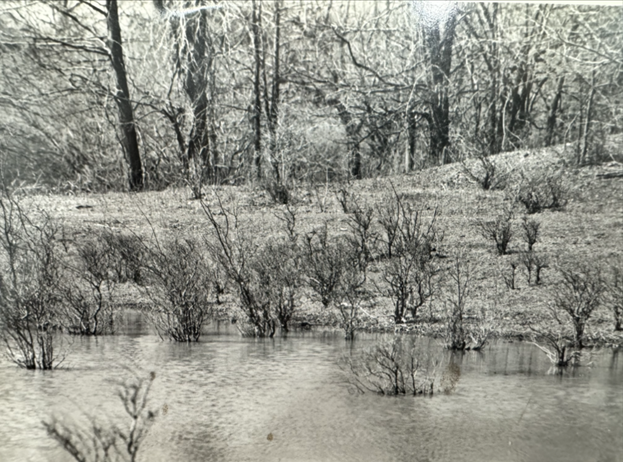
Water elm growing in and around the perimeter of retention ponds near the lake

Water elm as they typically appear prior to collecting
Occasionally Vaughn would go collecting water elm during July or August. The trees were experiencing summer dormancy at that time. The technique was to prune away any branches that were definitely not needed, spray the remaining foliage, top and bottom, with an anti-desiccant called Wilt-Pruf. The product seals the leaves and prevents any transpiration for about 30 days, allowing collected trees time to overcome transplant shock before they started growing again.
John Naka was very impressed with water elm as material for creating bonsai and I had the privilege of watching him work on a large specimen in the mid 1980’s that Vaughn had collected specifically for John to use as demo material.

We originally thought that the appearance of the water elms around the lake were caused by grazing cattle. However, we soon discovered that there were no cattle allowed there and that the trees were naturally stunted due to being submerged some six months out of the year due to the closing of a dam by the Corps or Engineers every Fall. The gates to the dam were opened every Spring, but by the time the water receded, the growing season for the water elms was greatly reduced.
The photos below show a couple of larger specimens collected by me from the lakebed.

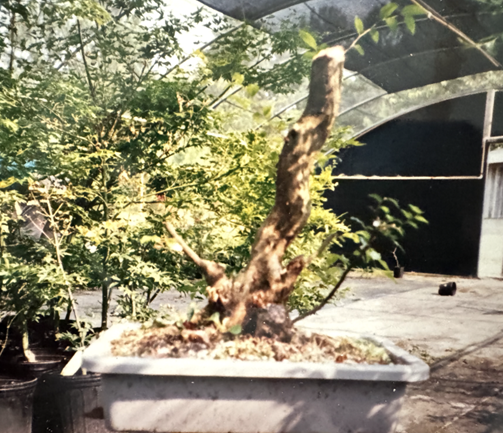
The one thing I learned from Vaughn about using water elm for bonsai is that it is incredibly adaptable to a wide range of styling options.
-Randy Bennett