


Taxodium distichum
This bald cypress was developed to prove to myself that I could create a classical style bonsai. This particular tree has taught me a lot of lessons in maintaining bald cypress at a high level of refinement. In the years to come I'm excited to see how the simplistic design evolves. Not typical to the Japanese bonsai model, I choose to make the crown very rounded and I may even round it off even more as it develops. 2026 update: The crown has been allowed to develop and widen further. The first and lowest branch has been allowed to run. This totally changed the feel of the time. I may cut the branch short in the future but for now it is growing strong to strengthen the branch overall. This bald cypress was collected by Nate Murray, 2019. It was grown in a mortar tub up until 2023. I repotted it and established its front in this classical style Chinese container. It was displayed at the first Bonsai Central in 2024. In the spring of 2026, I repotted the tree into a custom made pot made by Byron Myrick. I collaborated with Byron on the design and it came out exactly as I hoped. Newest photo taken by Jessica Broom.


Taxodium distichum, "Ghoul"
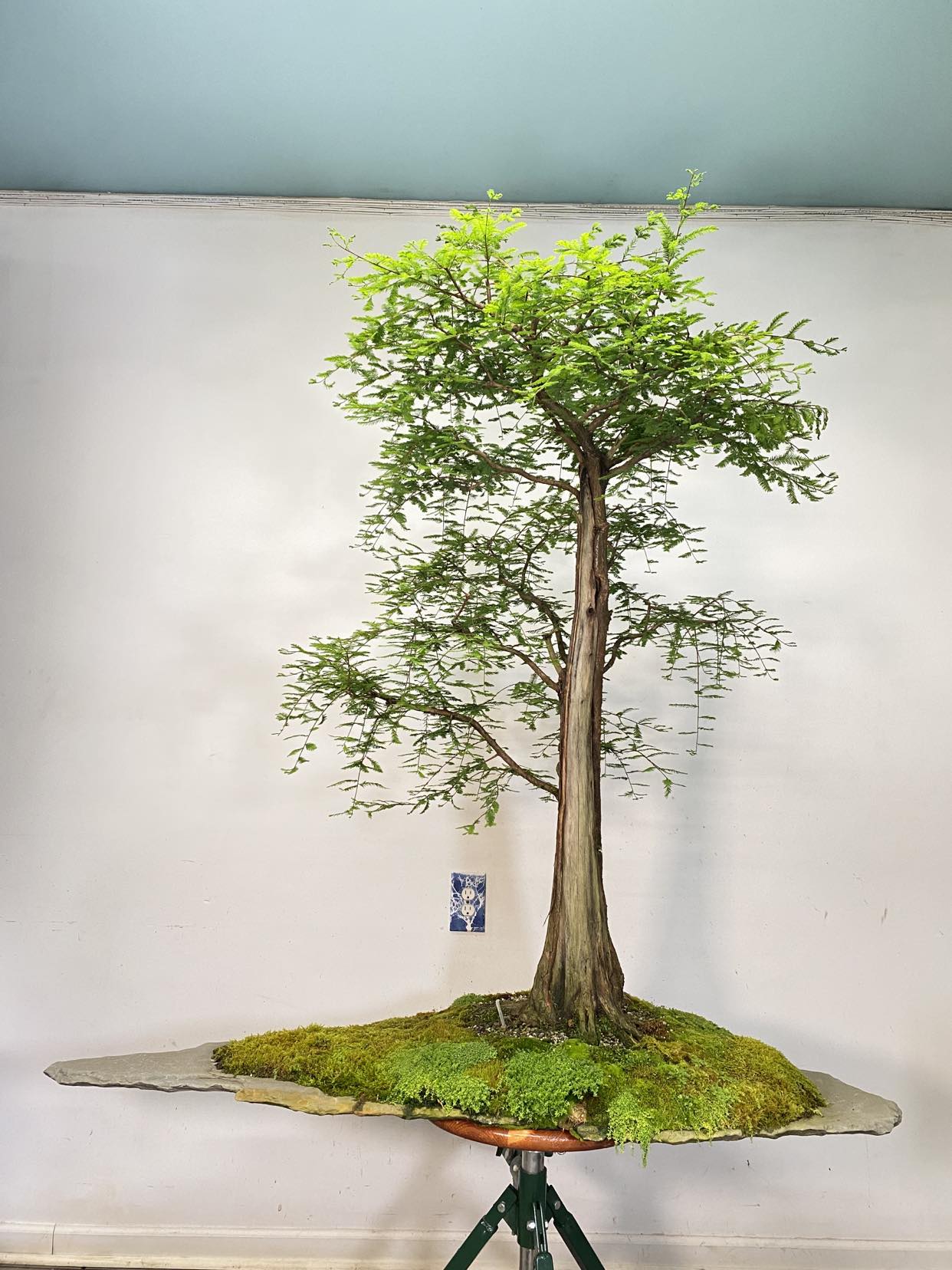
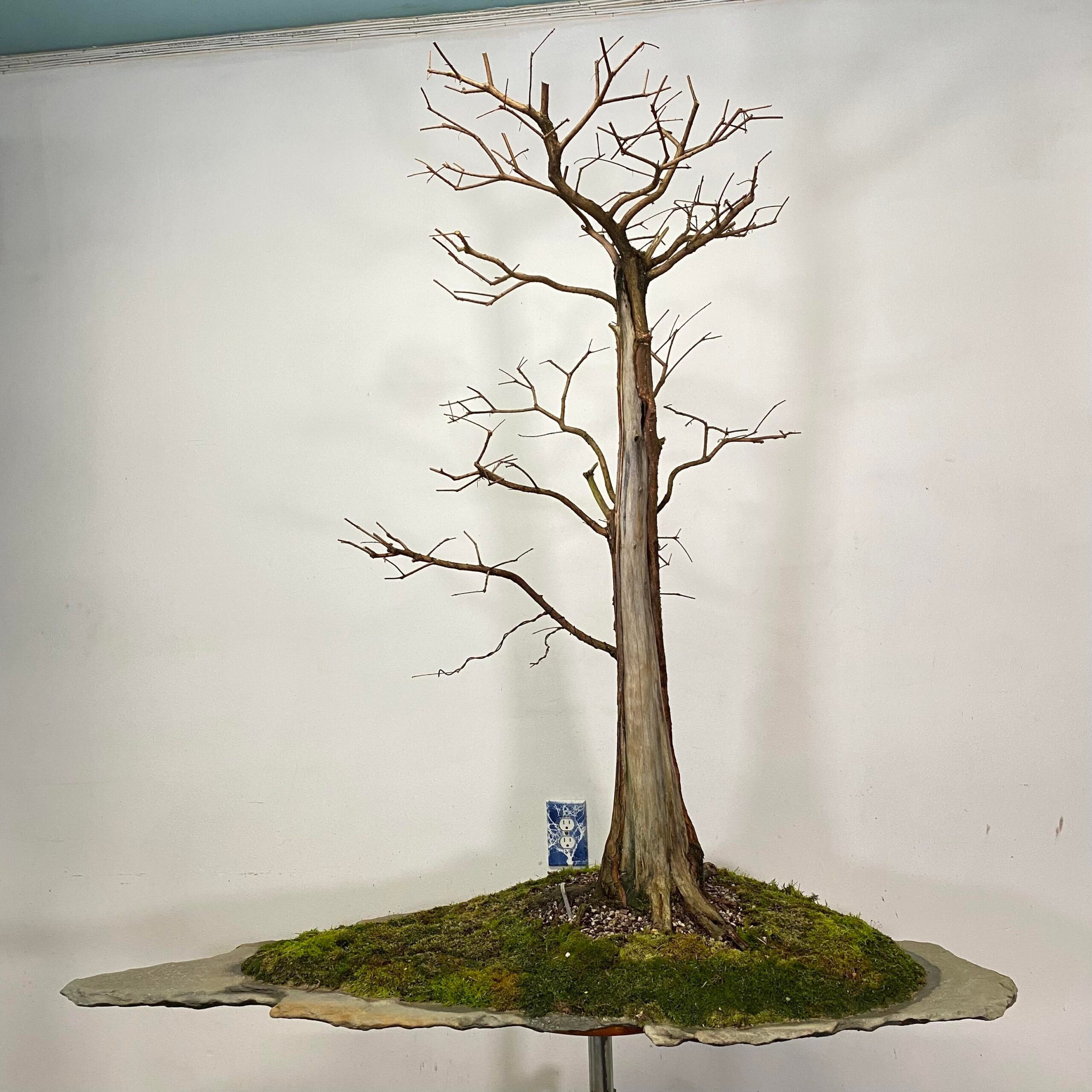
"Ghoul" is an American bald cypress that was collected by Nate Murray, 2019. I wanted to see more bald cypress shown on the thinnest possible planting prospective so I went with a piece of Colorado blue flag stone that was carved by Bill Butler. This tree was styled in 2022 and then planted onto the stone in 2023. It was displayed at the first Bonsai Central in 2024. Update 2026: The most recent picture of "Ghoul" shows a very dramatic shift in the tree's appearance. The deadwood has been pushed out and around by the heavy cambium build-up underneath. The once straight trunk now appears to be twisting and developing a slight curve to it. Some branches have been removed or greatly shorten and the overall silhouette is being defined. Time as a bonsai and being planted on the stone is really bringing this tree to a distinguished and settled in look. "Ghoul" is also part of an ongoing series of bald cypress bonsai that I am called the Coastal Restoration collection. Newest photo taken by Jessica Broom


Taxodium distichum
This beast of a bald cypress was originally collected by my friend Ken Oster near Slidell, La. Ken tells me the collection date was somewhere around 2005-2010. When I first encountered this tree in 2022 in Ken's garden, it was planted in a blue baby pool. It had been grown out to be a very tall bonsai and it was the first time I've seen a bald cypress its size with all its wounds completely healed. The largest healed wound was the initial chop that almost spans 10" inches across! The tree was too large for Ken to handle, so I purchased the tree and brought it back to the nursery. A lot of the height was cut down and only a few of the existing branches were left behind for its new design. I wired what was there and then left the tree to grow freely for a few years. In 2024, I repotted the tree into a Chinese round oval. It had grown a lot of new flexible branches to rebuild its form and I continued the full wiring that spring. I showed it at C'est Bonsai 2026. I had custom 36" inch pot made by Rob Wallace that I intend to repot it into in the spring of 2027.

Taxodium distichum
This extra large bald cypress bonsai was gifted to me in 2025 by a good friend of mine by the name of Dawn Koetting. Dawn mentored me in bonsai design and display back in 2019 and still teaches me when she has the time to visit the nursery. She told me that this bald cypress was one of the first her and her husband collected in 1995. And she has gone to say that it was certainly the biggest tree they ever collected from the swamps in Thibodeaux, La. For the hollow and deadwood, so the story goes that the tree was intended to be fully healed and free of obvious scars or hollows. But, due to the tree's size it proved more and more difficult to handle and repot for Dawn. Around the mid 2020's it was repotted and a large root was cut a little to short resulting in significant die back in the trunk. The front that I am using now was originally intended to be the back. Due to the fact that Dawn had already developed nice older branches on the tree over the past few decades I choose to keep as much as possible to preserve the original intended design. I choose to go with a much more classical approach. It was repotted in the spring of 2026 and was restyled.


Taxodium distichum
This bald cypress was collected in 2020 by Nate Murray near Franklinton, La. It has a great base and naturally occurring taper in the trunk but its true natural didn't show until I began refining its branches. In 2025, I styled the tree to reflect a design from Bonsai Techniques 2 by John Yoshio Naka. The design is on page 101 referencing a future plan for a pond cypress. The bald cypress pictured here had a very similar character and I was able to make a mirror reflection of the tree from Naka's book. Once I started to develop its branches further, the tree revealed itself to be a naturally weeping variant of bald cypress. It takes time for collected bald cypress to revert back to their mature growth habits as bonsai and this was a very exciting discovery. It was repotted in the spring of 2026 into a textured unglazed oval by Byron Myrick. Its new pot also was a near perfect match and makes the trunk look even more imposing.


Taxodium distichum
Here's an interesting spin on bald cypress. This tree was collected out of Doug Green's garden around 2017-2018. There wasn't anything particularly interesting about the tree when it was collected as it didn't have any of the desirable features that most bald cypress bonsai are known for such as flare, knees, or taper. It was just a plain barrel shaped stump that was flat cut roughly at 26 inches tall. This tree sat in the back of the nursery for several years just growing freely and I never really gave it a look over to see what could be done with it. When I pulled it into the studio in the fall of 2023, I came to find out that the entire center of the tree had rotted out and it was forming a cambium shell. The tree almost looks like stiff jacket standing up with branches coming out at all angles. Laurent Darrieux was visiting Underhill Bonsai for workshops at the time and was intrigued by the tree. He put his touch of Cosmic Bonsai on the tree with other elements of naturalistic hallow ancient old tree flare. I repotted this tree in the spring of 2024 into a nice shallow Byron Myrick soft rectangle. This is only the beginning of the design for this bald cypress and I can't wait to see what the future holds for it. This tree was displayed at the 9th National Bonsai Exhibition in 2025. Update 2026: I commissioned Byron Myrick to recreate the same pot style it was planted in but make it deeper with a moodier glaze. The result makes the tree stand out even more then before. Newest photo taken by Jessica Broom.

Lagerstroemia indica, "Alvarez"
This particular crape myrtle is very special to me and has a sad backstory to it. Back when I was just getting into bonsai, I was searching every garden center for plant material. I was always on the look out for the most twisted and ugly plants that a garden center or landscape nursery had to offer. Generally, plants in this category were on sale because they were not well suited for landscaping purposes. Alvarez Nursery, formally located in Hammond, La, was a fairly old nursery with a lot of overgrown back stock I would pick through nearly weekend at that time. The owner, Mary Alvarez, took note of the pathetic looking plants I was buying from her each week and she started doing some digging around of her own. The more I visited, the more twisted little plants she would have pulled and ready for me pick through. She had told me that her own father was also into bonsai as well and that she was happy to assist me in my quest for bonsai materials. In early 2012, I picked out this crape myrtle from the back stock and she promised that she would let me have the tree when it was time unearth it and chop it down in the spring of the next year. The crape myrtle had roots in the ground through the container it was in and had grown nearly into a full size tree. I was very interested in the surface roots of the tree and thought it be great for my first big bonsai project. It always saddens me to say the next part of this story, as Mary Alvarez was shot and killed by a drug dealer while she was working at the nursery on November 14th, 2012. Alvarez Nursery was shut down and the plants were liquidated shortly after. I returned to the nursery during the liquidation sale to find the same crape myrtle pulled to the front with a tag hanging on one of its branches. The tag had my name written in Mary's handwriting. The tree went home with me that day and has been developed into the bonsai pictured here. It may not be the best crape myrtle bonsai you've ever seen but this tree means so much more to me than that. This tree is now a representation of my beginnings in bonsai and what I dreamed to create. This tree will always be in memory of Mary Alvarez, November 7, 1949 - November 14, 2012. Newest photo taken by Jessica Broom

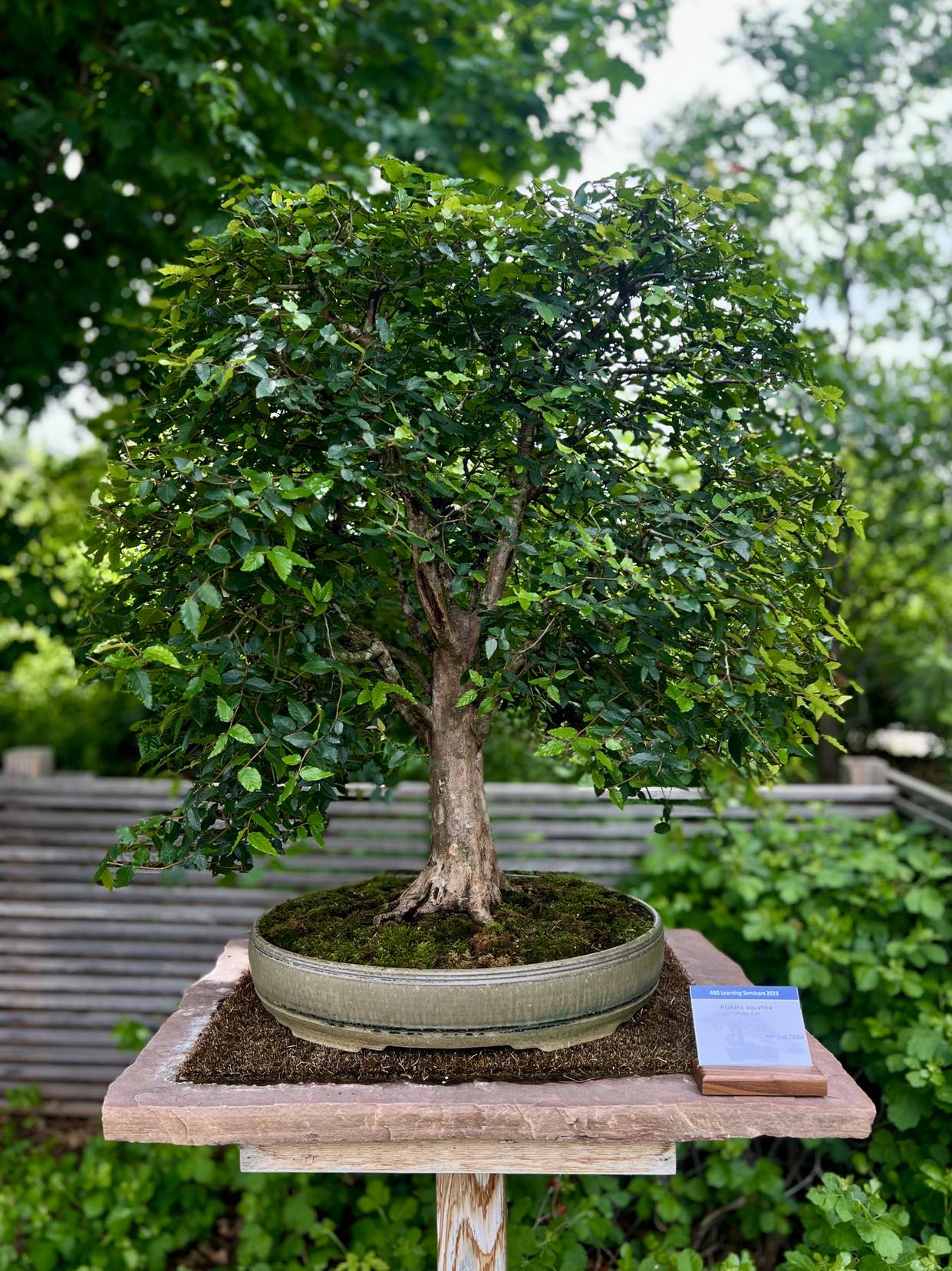
Planera aquatica
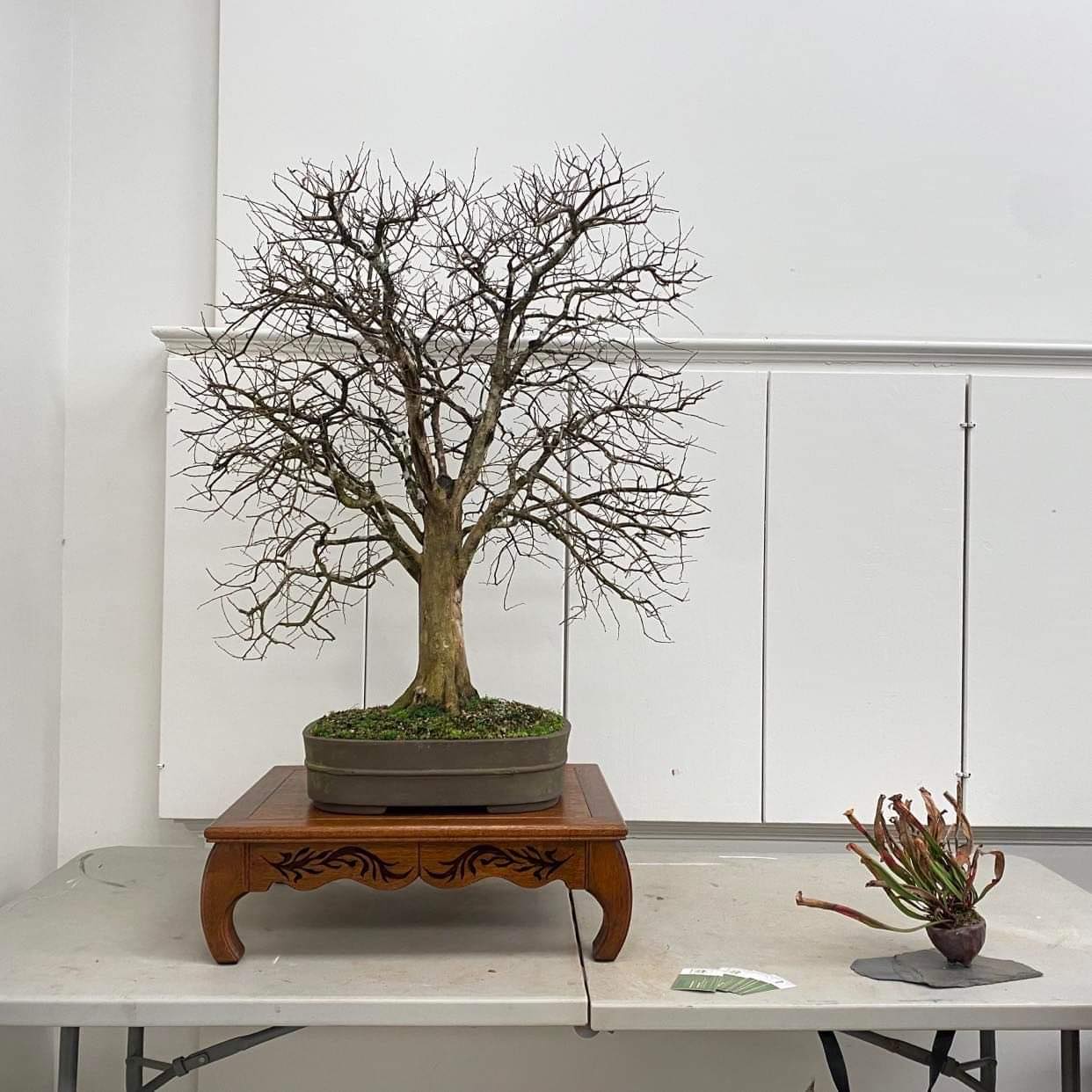
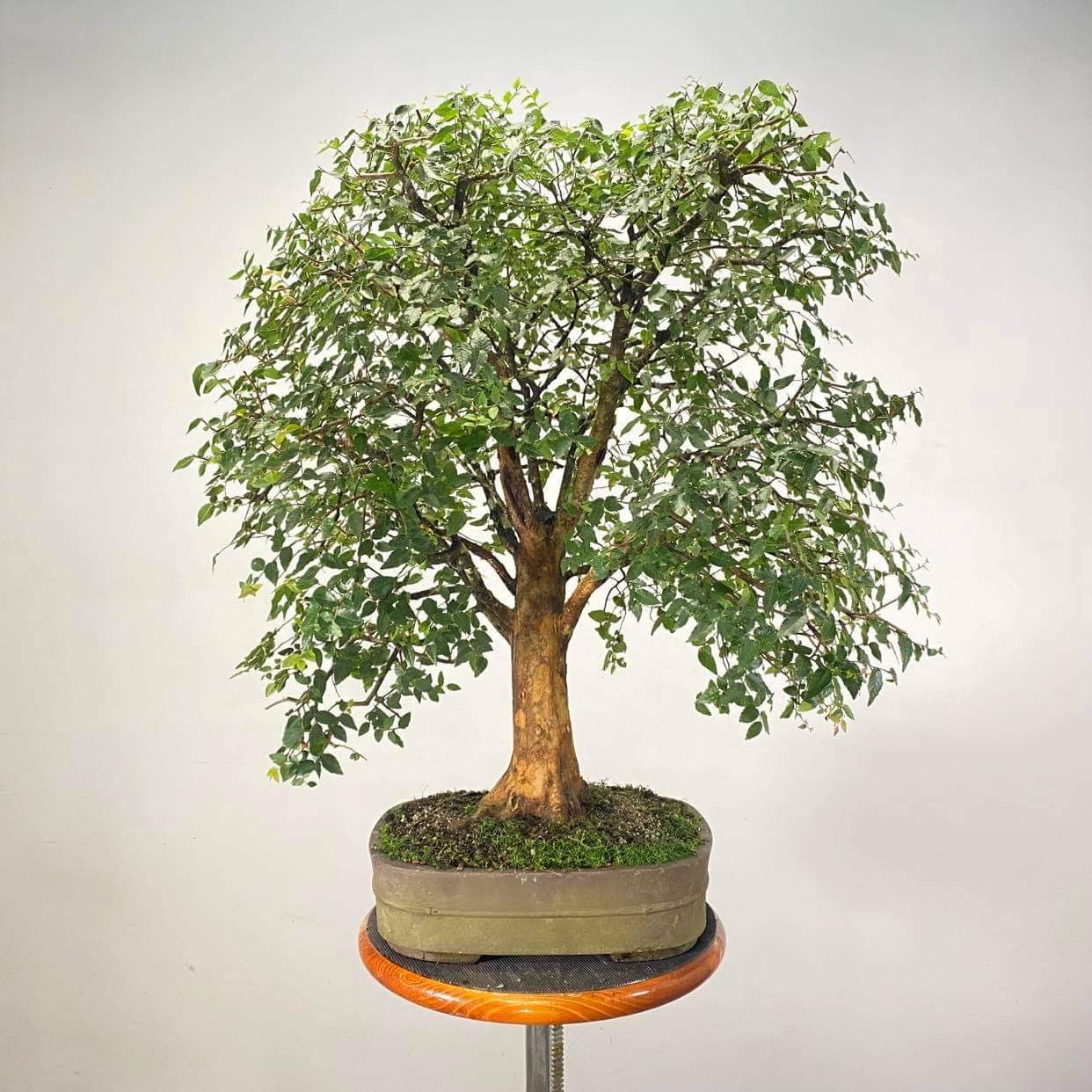
This water elm wild broom style was originally collected out of Lake Catahoula by Zach Smith, where a lot of water elms are historically collected for bonsai. It's hard to find the exact date of collection but looking at early photos of this tree sent to me by Doug and knowing about recovery time needed for a tree this size, I'm estimating this tree to have been collected in 2006. The first image is the best view of what the silhouette looks like in full leaf. The second photo shows the beautiful ramification that water elms are capable of. This tree was shown at the 8th National Bonsai Exhibition in 2023. It was also shown at the American Bonsai Learning Seminar show within the same year. *Update, this has also been shown at the first Bonsai Central in 2024. Since that show it has been up potted into a container that is about an inch on all sides wider. The new container is an oval by Eli Adkins, moniker Waldo Street Pottery. Newest photo taken by Jessica Broom.

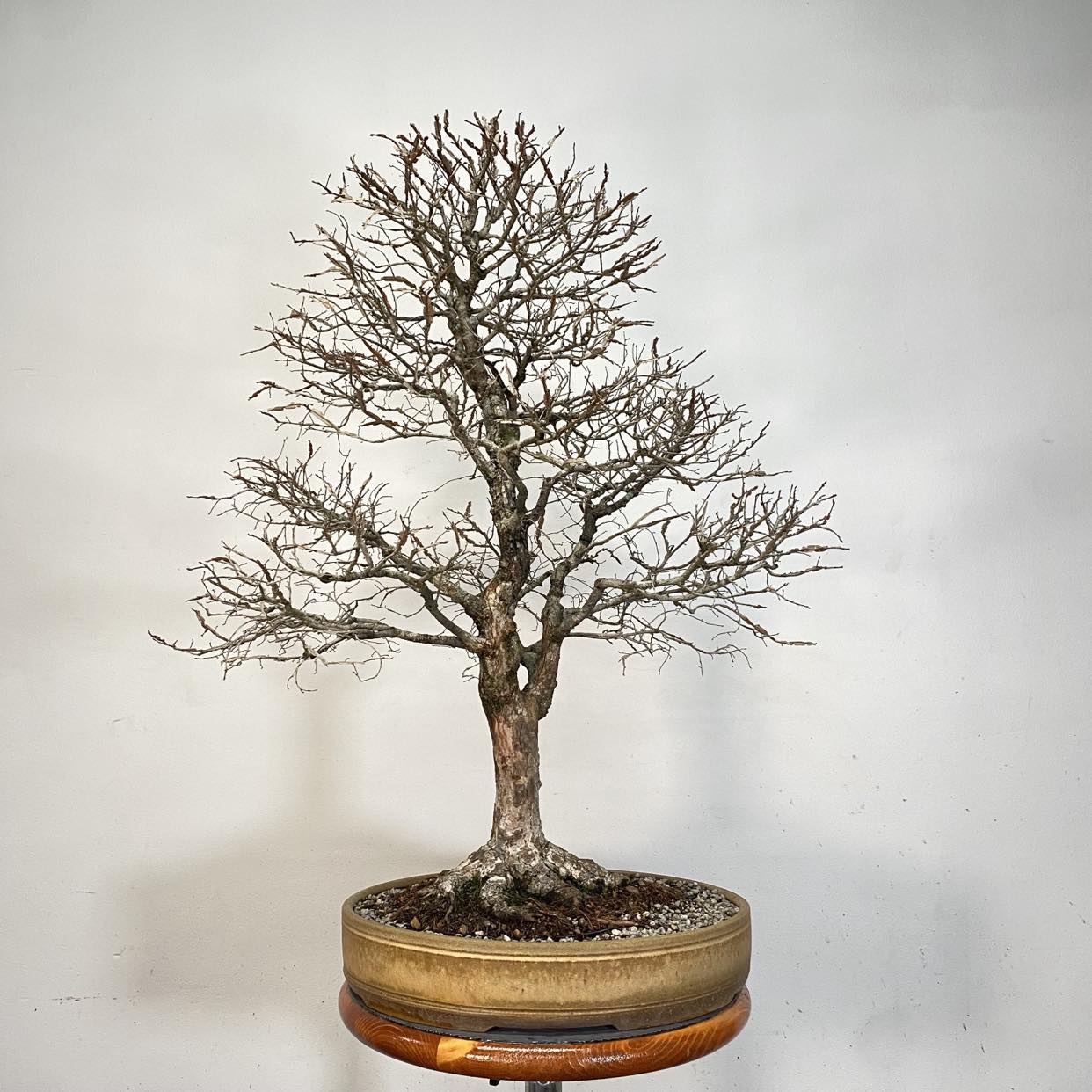
Ulmus alata "New Hope"
This winged elm is a very special tree to me, Doug, and the nursery. It was collected by Doug Green in 1987, or at least that's the year he recalls. He told me it was definitely towards the end of the 80's. Its name comes from the collection location being in New Hope, Alabama, as simple stump. The tree was probably 5-8 years old before it was chopped down. Doug then grew it out into the shape it is now over the coarse of 30 years. Flash forward to the events of hurricane Katrina. The after effects of the category 4 storm left a lot of Louisiana residents in a state near hopelessness. For Doug, he lost a good number of his bonsai just as many other bonsai enthusiasts had as well in the New Orleans area. "New Hope", this winged elm, was one of the few trees that bounced back. Doug refers to this tree as the savior of Underhill Bonsai nursery. He has told me that if it wasn't for this tree he would have given up all hope in bonsai and never pursued opening the nursery. I restyled this tree in 2019 and then repotted it into an updated Byron Myrick container in 2020. It went to show at the 7th National Bonsai Exhibition in 2021. Doug gifted it to me after the show and it now resides in my personal collection. Newest photo taken by Jessica Broom.

Carpinus caroliniana
This American hornbeam was collected and developed by Guy Guidry (date and location later on when I ask him more about it). Gifted to me in 2025 by Guy and repotted into a flame licked blue oval by Nao Tokutake.

Carpinus caroliniana
This little American hornbeam is a fighter. Me and a friend of mine, Mark, joke about how he saved this tree from the trash bin. It was collected in 2020 by me and was originally a lot bigger. American hornbeams are notorious for not surviving collection or having major dieback issues. This particular tree died back all the way to a single shot way lower then what I was hoping. I made a few attempts to style it and wasn't very happy with it. So, I let the single branch grow out into what became the tree's entire branch structure. In the spring of 2024, I decided to try putting it in a bonsai container and found the root system to not be up to my standards. So, I tossed it in the burn pile because I had many other trees to work on I considered more worth my time. Mark found it a few days later and put it in the pot it is in now, a dark ash glaze rectangle by Byron Myrick. After seeing what it looked like in the pot I trimmed back a few branches and gave it a second chance. I'm glad I did because it became one of my favorite bonsai. I showed it at C'est Bonsai 2025. It is planned to be donated to the Pacific Bonsai Museum in 2026.


Carpinus caroliniana
This american Hornbeam is quite a big boy. It has been an absolute blast developing this tree from a raw collected yamadori. This extra large bonsai was ordinally collected by Benson Green, Doug's son, in 2018. It was potted straight into the professional blend of bonsai soil we use at our nursery. This type of thing usually doesn't work out too well for American hornbeams as they do not recover from hard chops on their root systems, especially if they are bare rooted like this tree was. Luck was on our side though and the tree made a full recovery. The height was reduced and carved by Doug in 2020 and it remained at the nursery for some time and was allowed to grow freely and unchecked. In 2022, I drilled holes through the trunk to place thread grafts where the tree really lacked interest and canopy density. One of the two grafts took and it helped me further the design into a giant naturalistic style bonsai. It was potted into its first bonsai container, modern Chinese, in 2023 and now resides in my personal collection. From the photo you can see the scale of this tree next to my formal upright bald cypress and broom style water elm. Both of those trees are fairly large bonsai but this one takes the crown for the biggest in my collection. Newest photo taken by Jessica Broom.

Podocarpus macrophyllus
This beast of a bonsai was originally collected from the parking lot of what once was Pontchartrain Beach in New Orleans, Louisiana. Pontchartrain Beach was formally an amusement park opened on June 30th, 1928. The park was closed in 1983 due to a decrease in attendance and a lot the rides were moved to other locations. This tree was more then likely planted at the park in the very beginning. It was collected in 1998 by Dr. C Roy and then obtained by Guy Guidry in 2007. I repotted the tree with Guy in early 2024 and told him it would make a great show quality bonsai. We then went through and styled the tree to what the current photo shows. It went on to be displayed at Bonsai on the Bayou, Texas state show, and the first Bonsai Central in 2024. Container is an antique Chinese rectangle and has been in this container for as long as Guy remembers. Newest photo taken by Jessica Broom.

Taxodium distichum
This is a weird bald cypress. It didn't have to be such a weird tree but it is like it choose to be this way and I like that. Why I am saying this is because the original intent was to develop this tree into a classical style bonsai. Around 2022 after carving and growing out the primary branches for a formal upright style it had a major dieback issue seemly out of nowhere. A lot of the secondary branch building was lost and the most offensive loss was the new top I had grown out. I had carved the tree into a new leader to improve its taper, like I do with many other bald cypress, and this tree just didn't take. The result is now a half dead top with a new apex growing from a once branch on the left side of the tree. After some thinking and giving the tree time to grow freely for a year it dawned on me: This is how flattop bald cypress typically form in nature. So now I have a weird approach to flattop style in this tree. To top it off, the foliage on this bald cypress looks to be crossed with pond cypress, Taxodium ascendens, as well! This bald cypress was collected by Nate Murray in 2020. It was repotted in 2024 into a high quality Chinese rectangle. Newest photo taken by Jessica Broom.


Celtis laevigata
This hackberry was collected in 2010 in Morgan City, La, and developed by Guy Guidry. It was repotted by me in 2024 and then was displayed at the first Bonsai Central in the same year. What I do know about the tree is that is was collected as yamadori, developed from a raw stump, and has been in training for a good number of years now. Southeastern hackberries are underutilized in the North American bonsai scene and this tree is a great candidate to encourage more bonsai practitioners to work with them. Bonsai pot by Byron Myrick. This tree went on to be displayed at the 9th National Bonsai Exhibition in 2025. While on display there it was chosen to be donated to the Pacific Bonsai Museum in 2026. Newest photo taken by Jessica Broom


Taxodium distichum
This might be a my favorite bald cypress bonsai in my collection. There's a lot of qualities that I treasure in the design and remind of me of what an earlier "dream" bonsai for my personal collection would look like. It's a little bit of classical design and a little bit of naturalist design as well. This tree was collected in 2019 by Nate Murray and I did the initial design in 2022. In early 2024, I potted it into its first bonsai container, Chinese unglazed bullethead oval, and it showed a lot of potential for refinement. It was displayed for its first time at the Louisiana Day of Bonsai 2024 and won Pedro Morales's "Golden Scissors" award. I plan on bringing it to many shows to come. Photo of the tree taken by Jessica Broom was right before refinement wiring and pinching was carried out in early 2024. It was then displayed at the Bonsai Societies of Florida convention in 2025. In spring of 2026, I repotted it into a "denim" blue oval by Byron Myrick. The tree feels like it is in a transition as I allow branches to extend for season or two and then cut them back. I think in a few more years this tree will truly begin to shine.
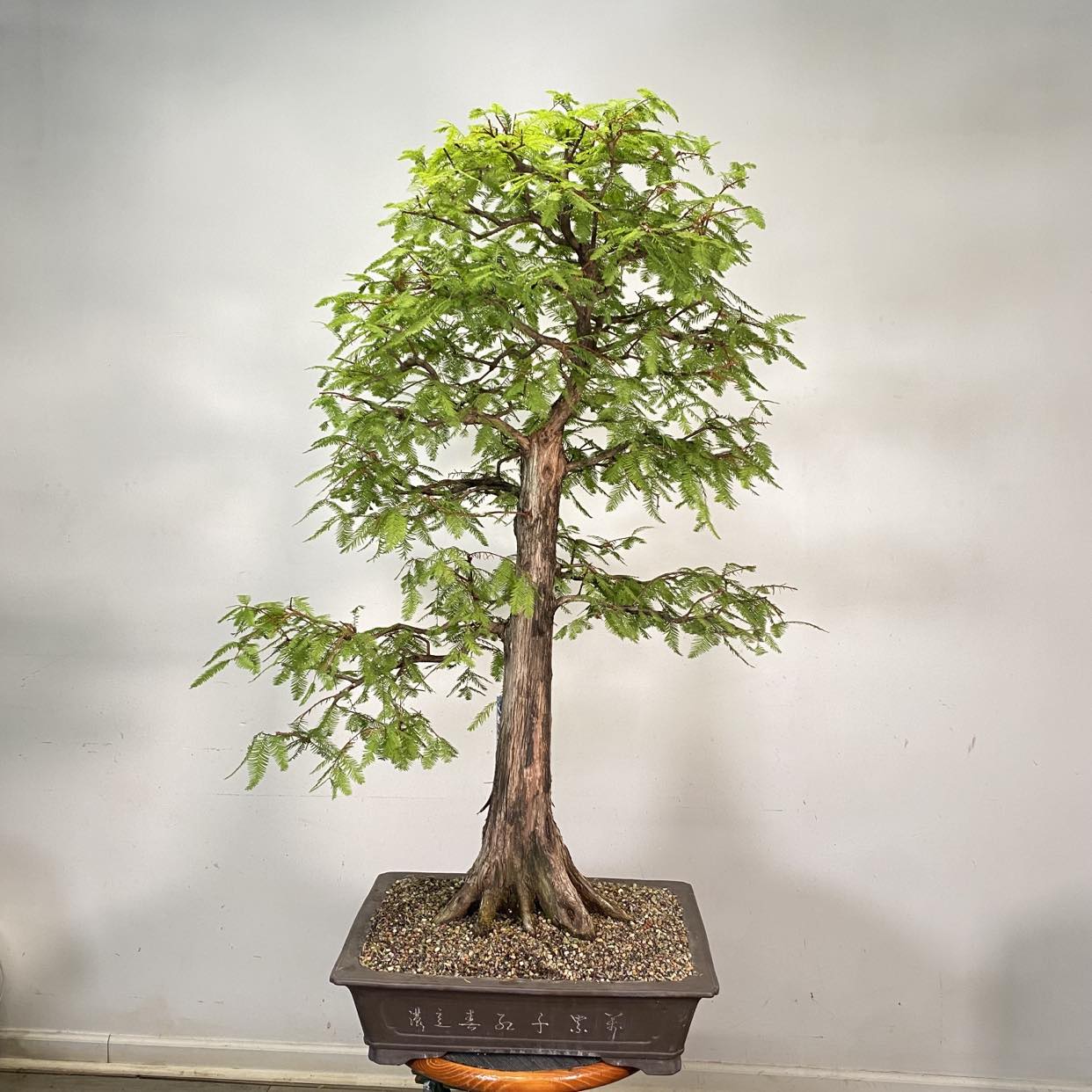
Taxodium distichum
An American bald cypress that was purchased from about yamadori collector in southeast Louisiana. If I ever get the name of the collector I will post it later on. This is a client's tree of mine. I really like the transitional feel of a mid age bald cypress on its way to becoming a flattop. Seemed appropriate at the time I created it as it relates to a turning point for me and the way I'm starting to approach bonsai design now.
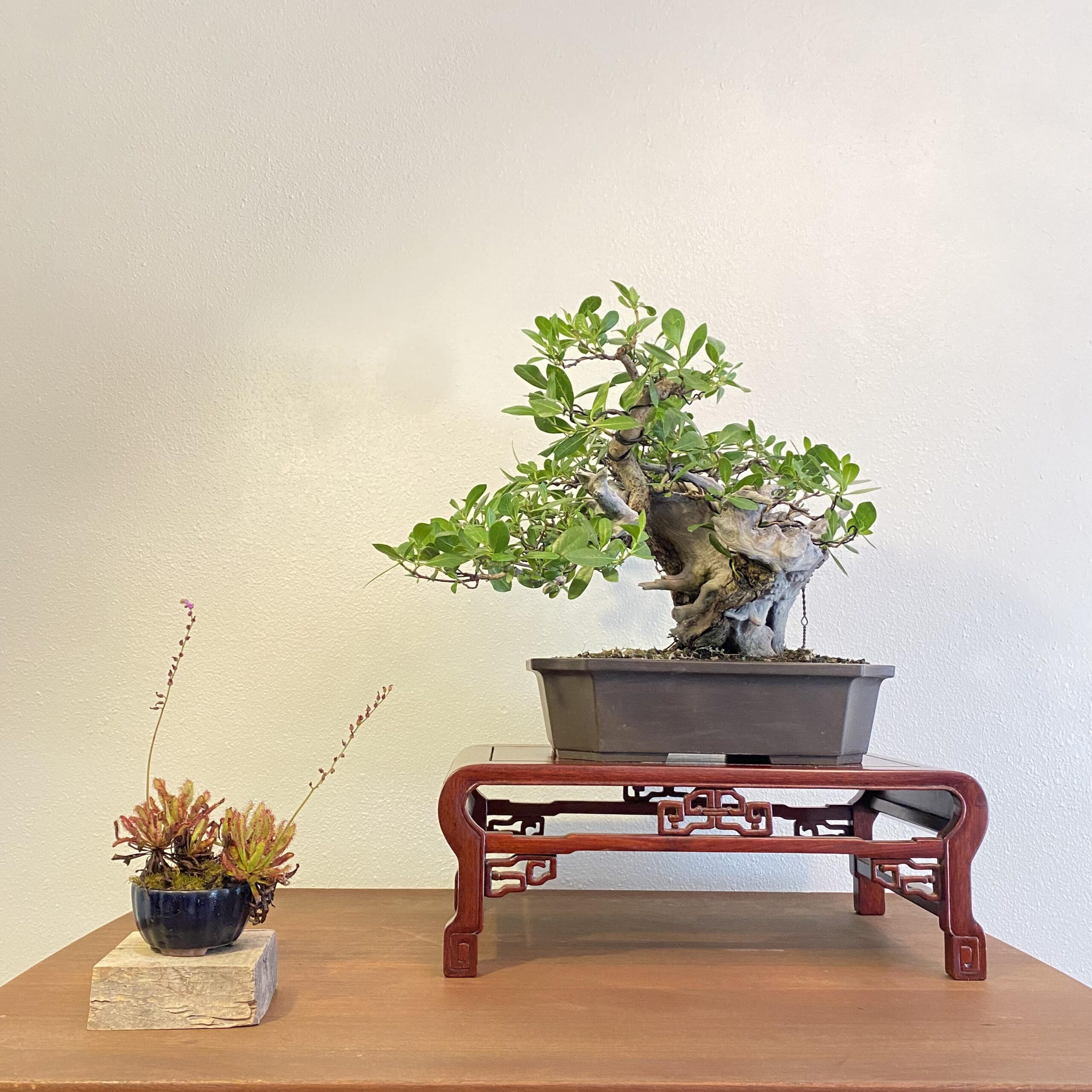
Conocarpus erectus
This is a buttonwood that was originally collected by the wonderful Mary Madison. I had the pleasure of meeting her in 2021. I obtained this amazing little clump of twisted deadwood of a tree from her then and now it's one of my personal favorite bonsai. This is a test show photo in preparation of showing it at the Louisiana Day of Bonsai 2023. Hopefully this will be the first of many shows to come for this tree.
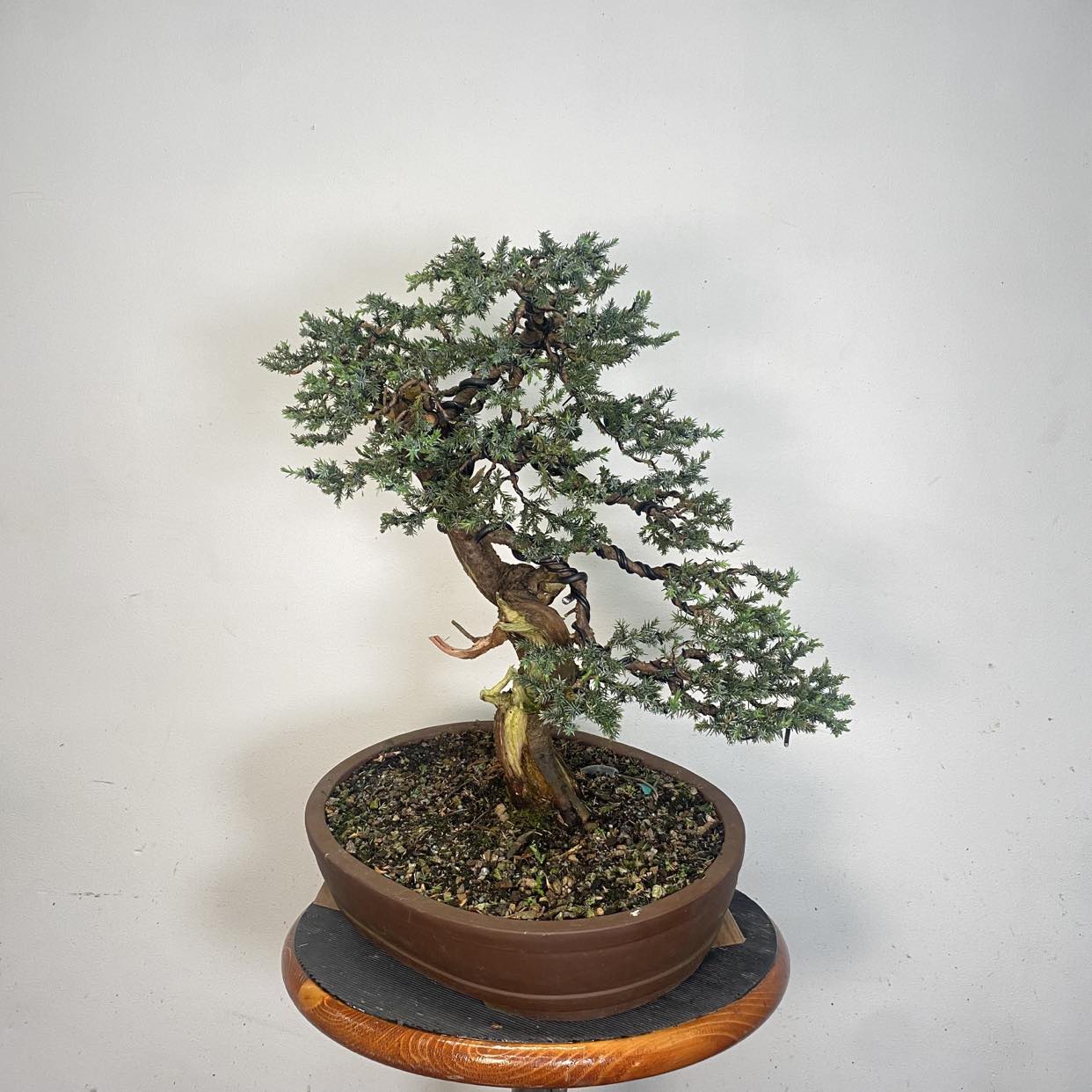
Juniperus chinensis 'Blue Alps'
It's not often I got a great piece of conifer material to work on at the bonsai shop. Junipers are not very popular in Louisiana as they are overshadowed by the easier to maintain bald cypresses and elms. This was a client of mine's tree that needed a serious redesign. I changed everything from the front to the planting angle of the tree to really show off the beautiful trunk line and add some drama to the other all design.
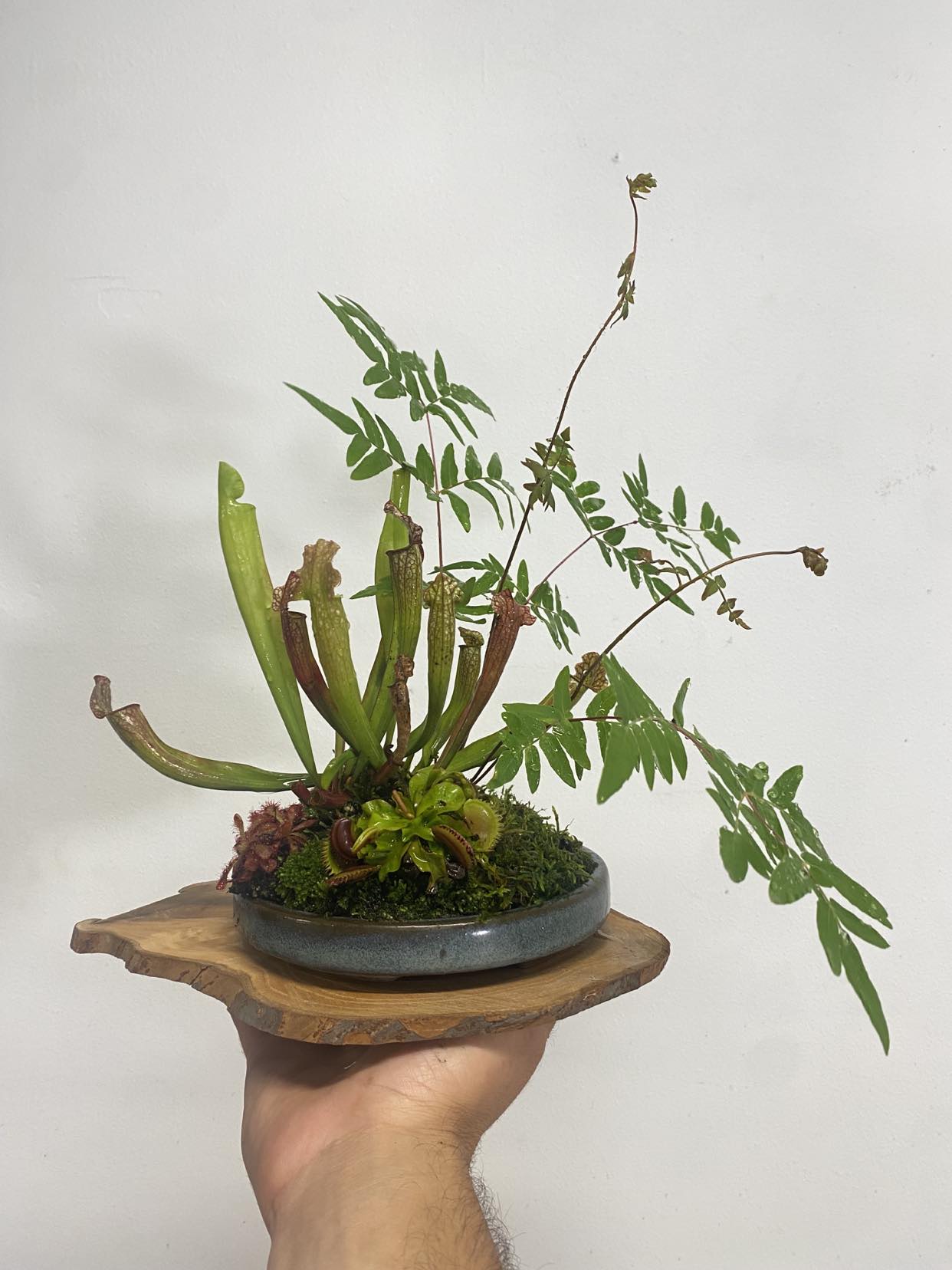
Carnivorous kusamono
A kusamono I created with all carnivorous plants, save the latter fern. In collaboration with Living Dead Domes, Ray Mulkey's carnivorous plants, I created this planting to accompany my water elm at the ABS show and 8th National Bonsai Exhibition in 2023. It is planted in a shallow Chuck Iker dish style pot. This planting won Best Kusamono at Bonsai on the Bayou 2024.