
12/18/2024
As seen in a lot of the previous articles, we have a lot of inspiration for water elm design now. To be honest, a lot of my work with water elm has been in the path of “Cosmic Bonsai” design as of late. I didn’t find it appropriate to publish a Cosmic style water elm at this time but trust me they will make their appearance later on. For now, let’s look at a more naturalistic bonsai design for water elm.

This water elm was collected from our grow field here at Underhill Bonsai. It was grown from a cutting and is roughly 4 years old at this point in time. The trunk base is 5.5 inches across and was a little over 4 feet tall when it was dug up (before I chopped it down).
Earlier this year, I chopped the trunk down to 11 inches and removed a few straighter pieces that wouldn’t contribute to an interesting trunk line. This chop was made in early spring and then the tree was allowed to grow wild and unchecked until early fall.
Early fall is sometime in mid October, depending on the night time lows and rainfall here in Louisiana. The weather tends to be very unpredictable and I like to get a head start on projects like this, so I stripped the leaves off early. Note: Leaves naturally dropped in mid December on our water elms this year, 2025. I’m not worried about this tree though due to its impressive vigor from the past growing season.
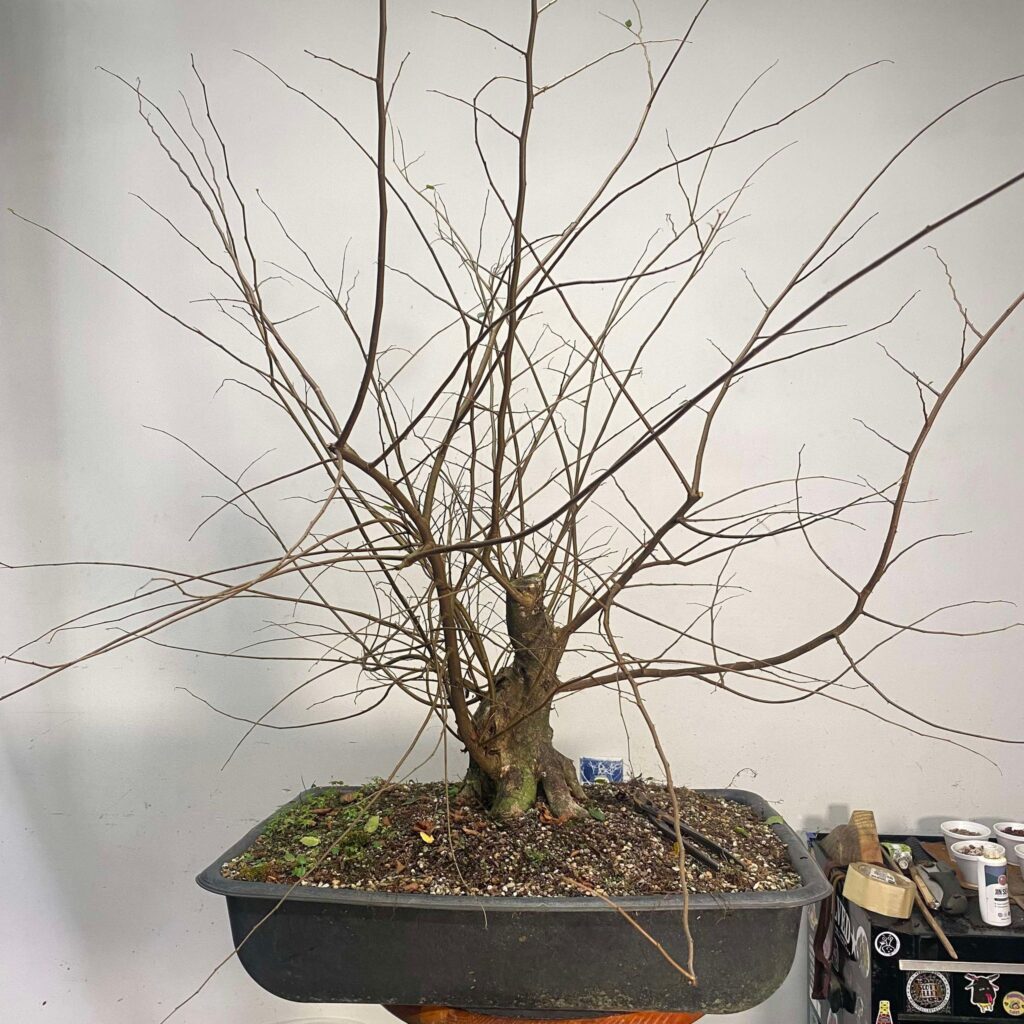
After removing all of the leaves, I can see the main trunk and branches available for my future design. There are a few different concepts I have in mind but before I get too ahead of myself I always spin each tree I work on all the way around. Now that I can see what has grown well and what the tree has to offer, I might make an adjustment to what would be a potential “front” based off of not having to make more major cuts again.
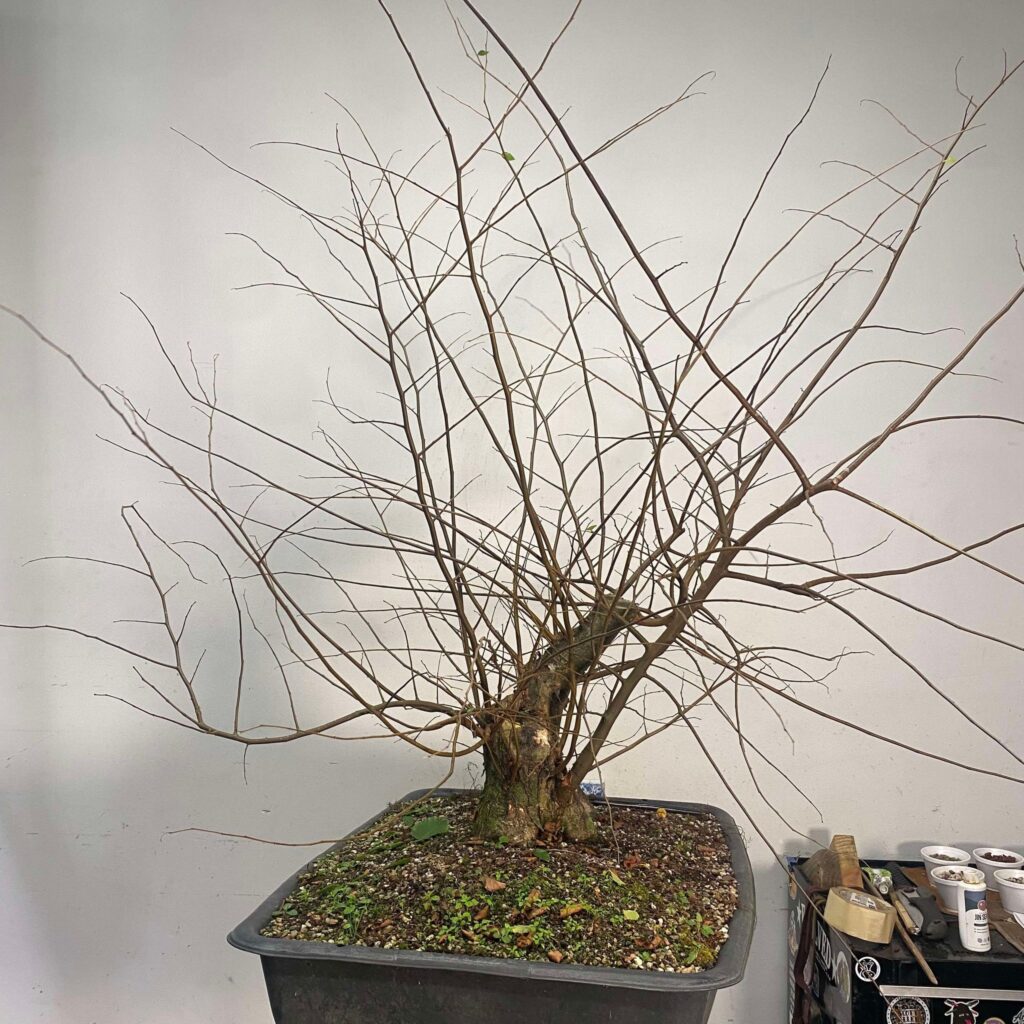
This isn’t a terrible option for our front but I find it to be a little boring. From this angle we can see that the water elm has back budded prolifically. Keep in mind too that this tree did not have any branches on the lower part of this trunk before I chopped the top off. Everything you see here was grown in 6 months. This just shows us how fast water elms are at generating new branches. I use this insane growth to my advantage at Underhill Bonsai and have been able to develop some very decent sized water elms in short period of time. Believe it or not, they grow even faster in the ground!
Like noted above, I find this trunk line to be lack luster. It’s a simple C shape without any other other defining features. It has great taper though but that’s not enough for me to choose this front.

This is probably the most obvious “back” of a tree I’ve ever seen. The trunk is arrow straight looking from this perspective and there is hardly any taper from the roots to the top to be seen here. There is a rough carving that needs to be reworked but even after that this would be a poor choice for a front.
A rule of thumb, “If you can’t find the front of your bonsai, first find the back.”
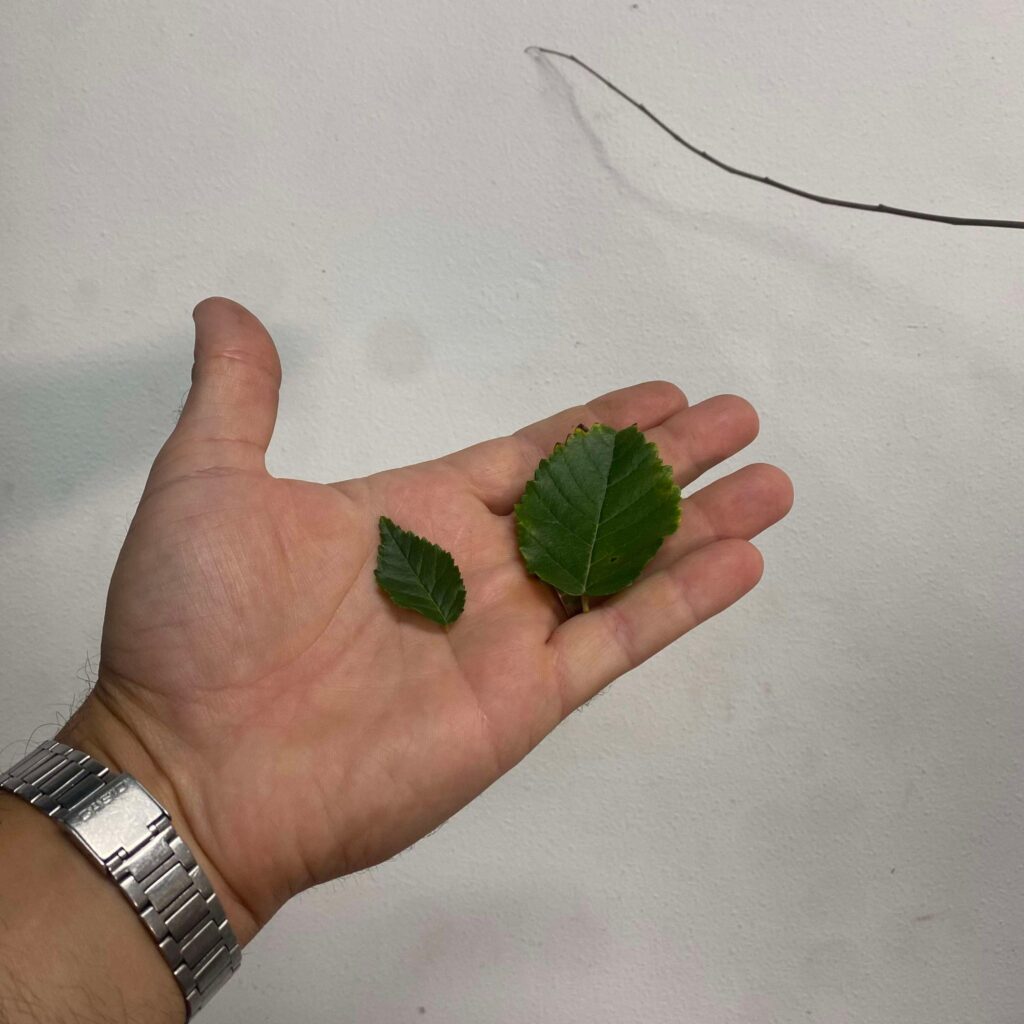
Before I forget, here’s an example of the leaf reduction on water elm. Their leaves start out at a decent size and can reduce down better then most deciduous trees. The leaf on the left is just the beginning of how small their leaves can became. I’ve seen leaves the size of my fingernail on more developed, well energy-balanced bonsai.

After a lot of turning the tree around and round, I settled on this front. I then removed a lot of branches that weren’t necessary for the design. I removed nearly 50 percent of the new shoots and still have plenty to play with. Seeing even more what the tree has to offer, I’m starting to see something interesting. Water elm have the tendency to grow like short bush trees in nature so I’m going with a denser, wider canopy. I’ll be using the thicker branch on the lower left as a secondary trunk. At least, that’s the idea as of right now.
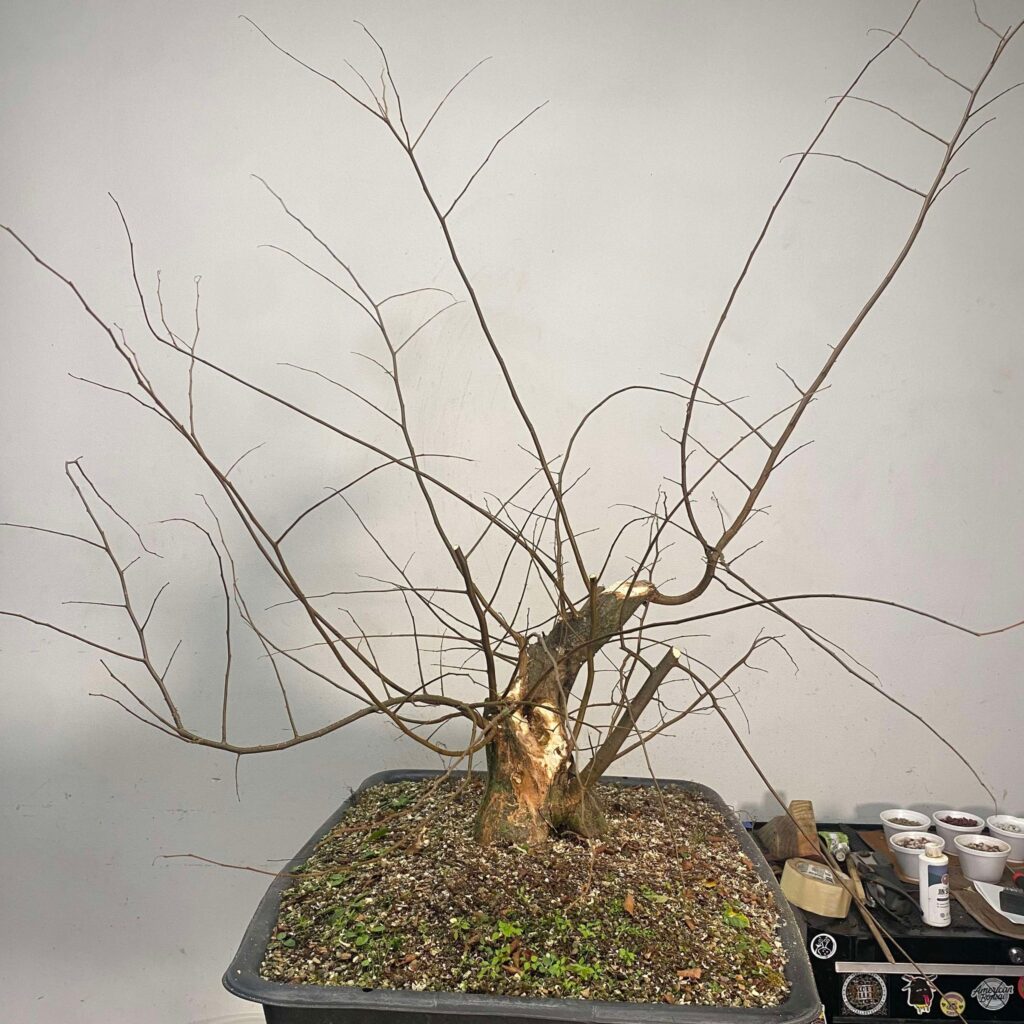
I’m showing this side of the trunk so you can see the carving I did to help with taper in the main trunk and into the new leader. It’s not the prettiest carving job I’ve ever done but I know with time this tree will heal this wound well. I prefer it to look a little rough to help improve the interest in this tree because water elms have a smooth untextured bark. Hollows and scars help elavate the character in developing young trees like this.

This is where we ended up after an hour or so of wiring out the main branching. There was a good bit of secondary branching to wire out here, too. With less then a year of work and development in this tree thus far, I can see a promising future for this tree. It will be allowed to grow freely next year as well. I will be watching the wire for cutting in and I will have to check often considering on how fast these tree tend to thicken. Once the main branches set and the wire is removed, I will hedge prune this tree to help maintain its shape. I will literally cut it like a shrub for a year. This will greatly increase the number of new twigs to choose from next fall.
I think this tree will be due for a repot in 2026. By then, it should be well on its way to becoming a charming little bonsai.

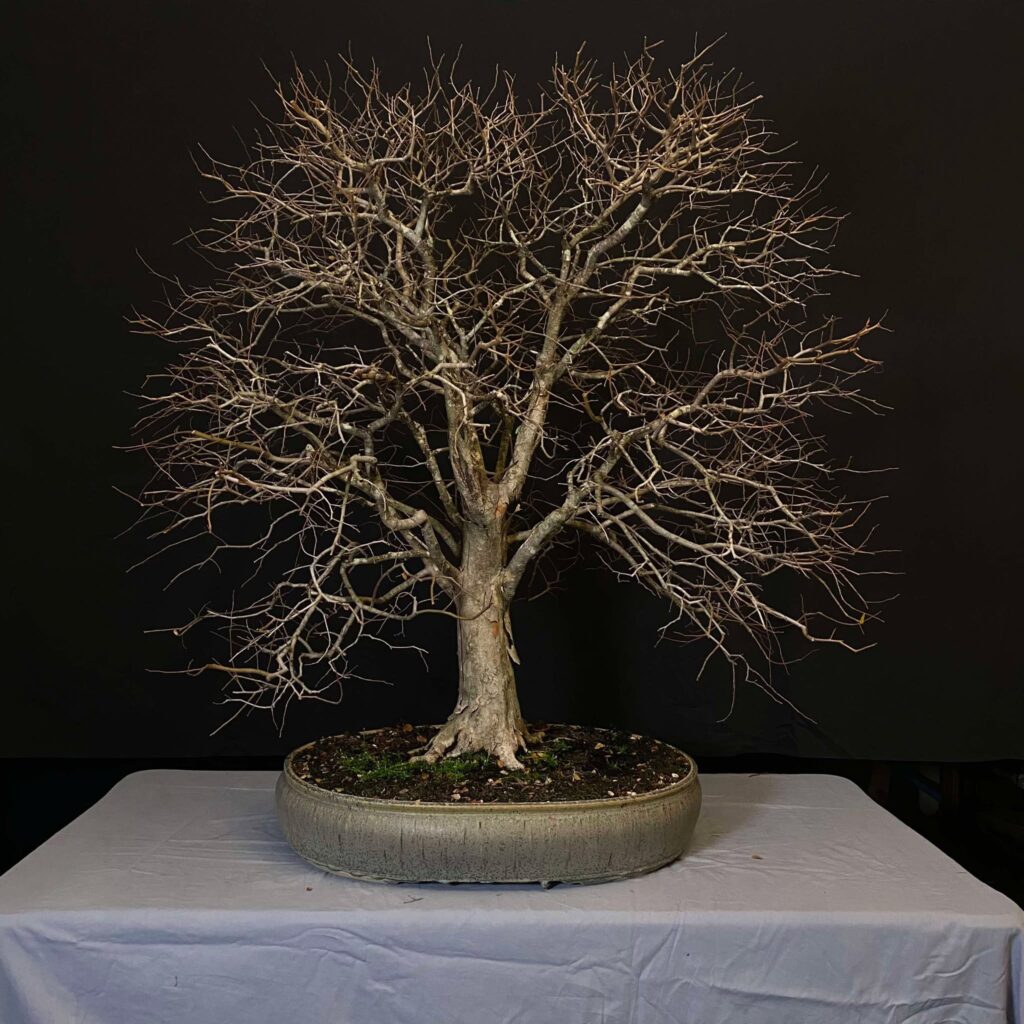
This is a water elm that was on display at a Lone Star bonsai convention some time ago. It was spotted and photographed by Dawn Koetting. I am trying to get more information on this water elm bonsai. If you know the owner or ARE the owner please contact me at evan@underhillbonsai.com. I have heard that this tree was once one of Vaughn Banting’s trees.
The water elm bonsai picture above is also a fabulous inspiration for our design. Like I said before, water elms have a bush like habit in nature. This style lends well to their naturalistic look and growth patterns. I know from my own broom style water elm in my personal collection that they can be treated as a cut and grow bonsai after their main branches have been set.
Cut and grow style development notes:
-Water elms have a tendancy to grow their finer shoots inbetween the space of larger branches.
-The majority of finer twigs grow laterally and then slightly upwards. Perfect for a natural look.
-I only prune the strongest shoots on water elms and pinch out the emerging shoots on the exterior of the canopy.
-Once all of the branches are the desired girth, I cut out synethic fertilizers and only use organic fertilizers.
-I do not apply any wire unless absolutely necessary. Best case scenario is if a branch is in the wrong place, stub it back and regrow it.
-During repotting, do not prune the rootball back hard. This will promote overly vigorous shots and fine shots will die back.
-Use the water elm’s alternating growth pattern to your advantage. Like all elm varieties, directional pruning is as easy as cutting back to a bud facing the direction you want.
-Partially defoilate your water elm often (I do this quarterly). Remove the large leaves first and then open up the pads so light can hit the interior finer twigs.
There are plenty more water elm projects in the queue for next year. We have a handful of water elms still in our grow field ready for collection in the spring of 2025. I even have a water elm I’ve been designing in the the ground ready to come up this coming year as well. Lots of exciting developments to come!
-Evan