
Welcome back guys, it’s time for a revisit on a project I started with Guy Guidry a little while back. This Podocarpus macrophyllus, or Buddhist pine, has been allowed to grow freely since our last session with it. Click the embedded link to see where we started.
This is where are now in the same year, mid-summer, with the tree:

“Just like Japanese Black Pine, most conifers really get pruned more then just once a year. Everything that grew in the spring time can be pruned around June 10th in southeast Louisiana but could have a dramatic change in winter here as well. So, we are cutting back to the new growth to encourage the third year growth to back bud. That is the typical cycle of evergreen and conifer growth patterns.”
-Guy
The podocarpus was potted into a more suitable container to do two things. One, to get the potting angle correct as we continue to work the tree and two, to allow more space for root development.
As you can see, the tree was formally defoliated and has completely replaced all of its leaves and then some. Shots have been allowed to elongate to set branches that have been wired and to regain vigor. For this session, we are going to be trimming back hard to encourage back budding on developed sections and add some wire to new shots that will help us continue to build the canopy on this tree.

Guy is seen here bending the new grow down and out. This is test the flexibility in the new shots and also causing micro-fissures in the plant material. These micro-fissures will help us wire and bend them easier and the weight of the shots give a little extra leverage. These shots will be cut back but its always good to “limber up” the shots and branches we are looking to move. Its sort of like a bonsai massage in a weird way but it can help prevent going too far too quickly and breaking a branch.

Another thing we doing today is cleaning out the pads and making more air space for new growth. I not only shorten nodes back to help tighten the branch structure but also cut downward hanging leaves. This gives the pads a more refined look and it is a practice that should be carried out on evergreen pinching and pruning processes.

A much cleaner look!
When I make my way through the rest of the tree doing the same to each pad then all the of the breaks in the canopy will look more believable and just prettier over all.
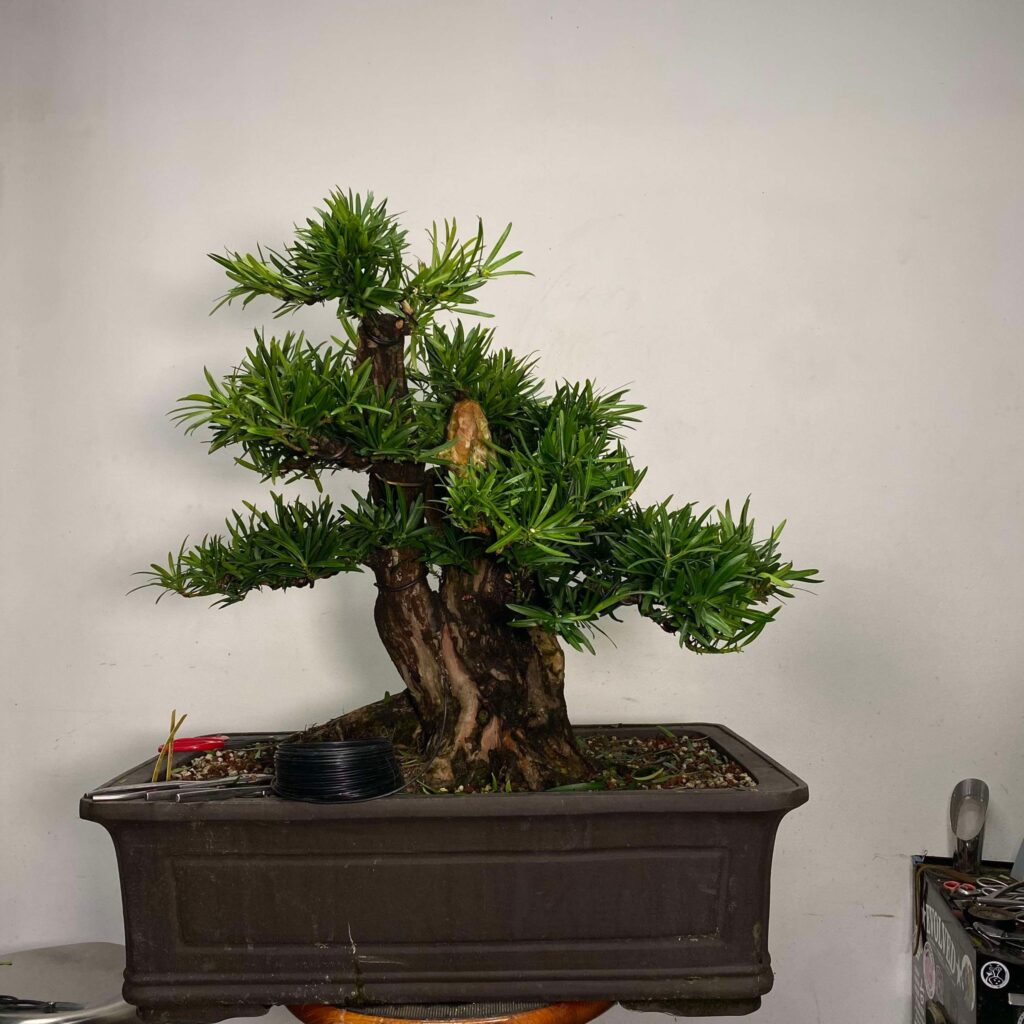
The podocarpus after an hour or so of clean up. There’s a good bit of pad refinement to be done but the future bonsai design is peaking right at us. This is only the first six month of training but the results are promising and this also tells me that we’ll have a good looking bonsai this time next year.

The front of the tree isn’t the only important aspect of the design though. Guy spotted a chuck of old wood that wasn’t contributing to the tree health wise. By removing the section of wood we can make even more air space for pad to further develop and fill in. The more sections of pads we can grow and add to this tree the better. We not only can build health and vitality in the tree but also have more depth and interest. Creating spaces in bonsai like this invites the viewer to continue to explore the tree and make the tree feel more intricate.
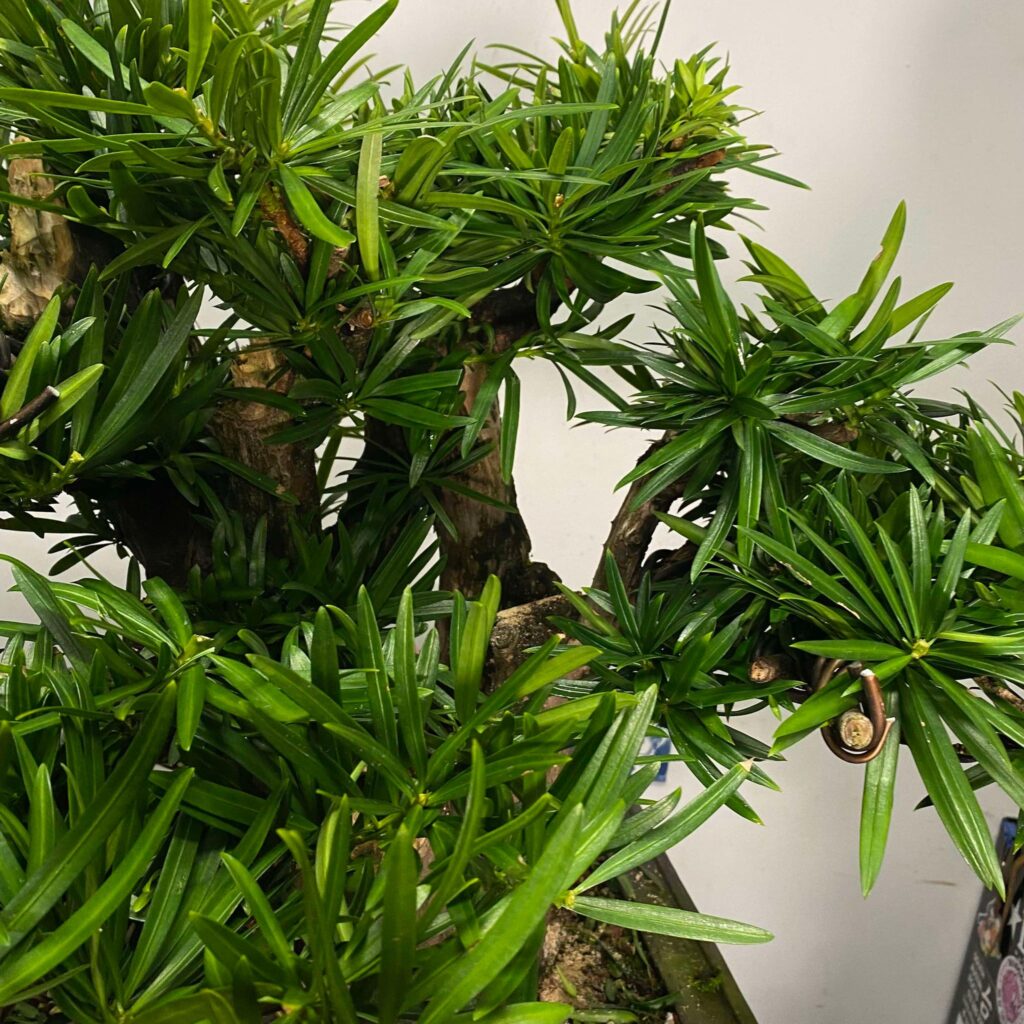
That’s a lot of new real estate for branching and leaves! Given how fast the tree has been growing we should be able to get a new shot into this zone fairly soon.

And here’s the podcarpus after finishing up the clean up, wiring out new shouts, and pruning back. As you can see the crown, the very top, still has a long ways to go. The crown will be grown out to be nice and board to match the chunkiness of the design. The straight section will more then likely be carved or reduced in some way. Growing the shots on the top and wiring them down over that section will also help. Like I said this is only the first 6 months of development. I can’t wait to see what this tree will look like in the years to come.

Until next time!
Cheers,
-Evan