
It is time to go back to the basics. What I mean by the basics, at least for me, is going back to something familiar. That familiar thing is the winged elm, Ulmus alata, which was my first love when it came to southeast native species. I have developed a good number of these trees for bonsai and I don’t intend on stopping that work and research anytime soon. This species is one of the best learning tools as far as for working with native trees here. I have praised this species many times over for their resilience.
Story time. Years ago, nearly 10 years from the writing of this blog post, I thought I had killed one of my valued winged elms by droughting it and so I threw it in the trashcan out of grief. It rained the next day and then a few days went by and the tree that I had assumed to be completely dead was covered in new buds. They tree is still a piece of bonsai material to this day.
I would normally collect winged elm wild, utilizing “yamadori” practices, to obtain them for work but we have been going about things differently here at the nursery. Being that we have 10 arches to work with here and there is plenty of for grow fields available to us for our own stock, I have taken several cuttings (of various species) and planted them. This solves a number of issues when developing young winged elm to become pre-bonsai stock. One, I don’t have to go scout them in the woods and hope for a decent collecting location. Two, I can control their grow much easier in the ground by making cuts and creating my own taper and movement. And three, when they are ready to be dug up and potted into a training pot they are much easier to handle right onsite at the nursery. I’m calling them young trees, being around 5 years old from cuttings, because the plan is that they will live on to be older bonsai hopefully. I have a winged elm in my personal collection that has been in training in a bonsai container for 30+ years now. So, I can set them up for success much earlier on in their life and my life.
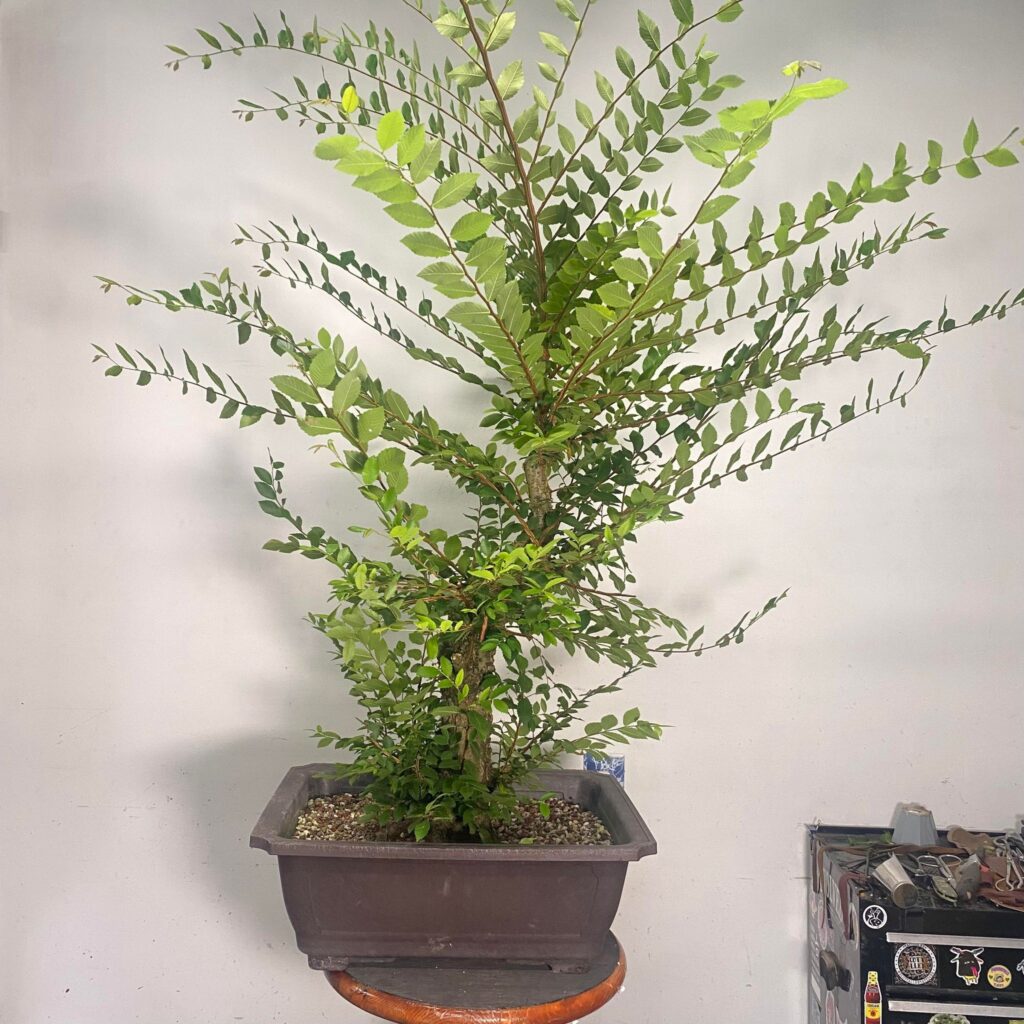
There’s already a good bit of new branching blowing out on this tree and its only been out of the ground for 6 months at this point. I’m not going to be doing anything major here to hinder the tree’s health and recovery. I’m only going to be removing branches that are 100% unnecessary for the design and also branches that could cause issues like inverse taper or overcrowding.
First things first when working with a piece of raw material like this is to find the potential “front” of the tree. Every bonsai has a front and every good bonsai has an established trunk line. Great bonsai have both of the elements mentioned before in addition to proper branch placement. With such a ripe tree we can choose everything we need for a good future and remove anything that would overcomplicate things.
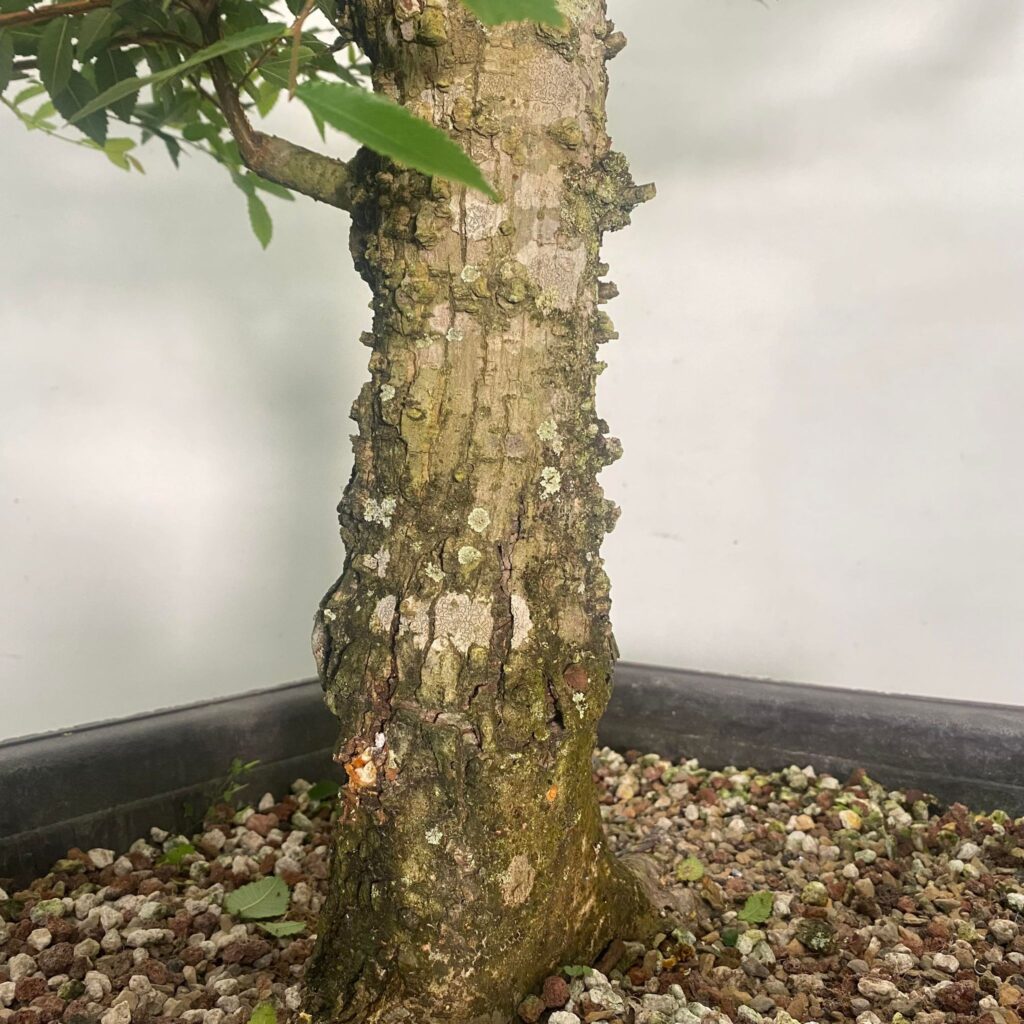
I went ahead and removed the lowest shots coming out of the trunk. Removing them gives me a better view to choose my “front” and also so we can appreciate the beautiful corky bark on this cultivated selection of winged elm. We took cuttings off of an exceptionally rough and corky barked winged elm and in 5 years in the ground I would say this was a success.

This is a little bit higher up the tree and the bark texture just keeps getting better. Having a solid and old looking trunk is half the struggle in bonsai and these winged elms are doing all the heavy lifting for us thus far. I’m excited to see what these tree will look like after several years of training. Things will slow down as far as bark growth like this but its always a plus to have it right off the bat.
I have four different options for the choosing the “front” on this tree. Roll that beautiful bonsai footage!

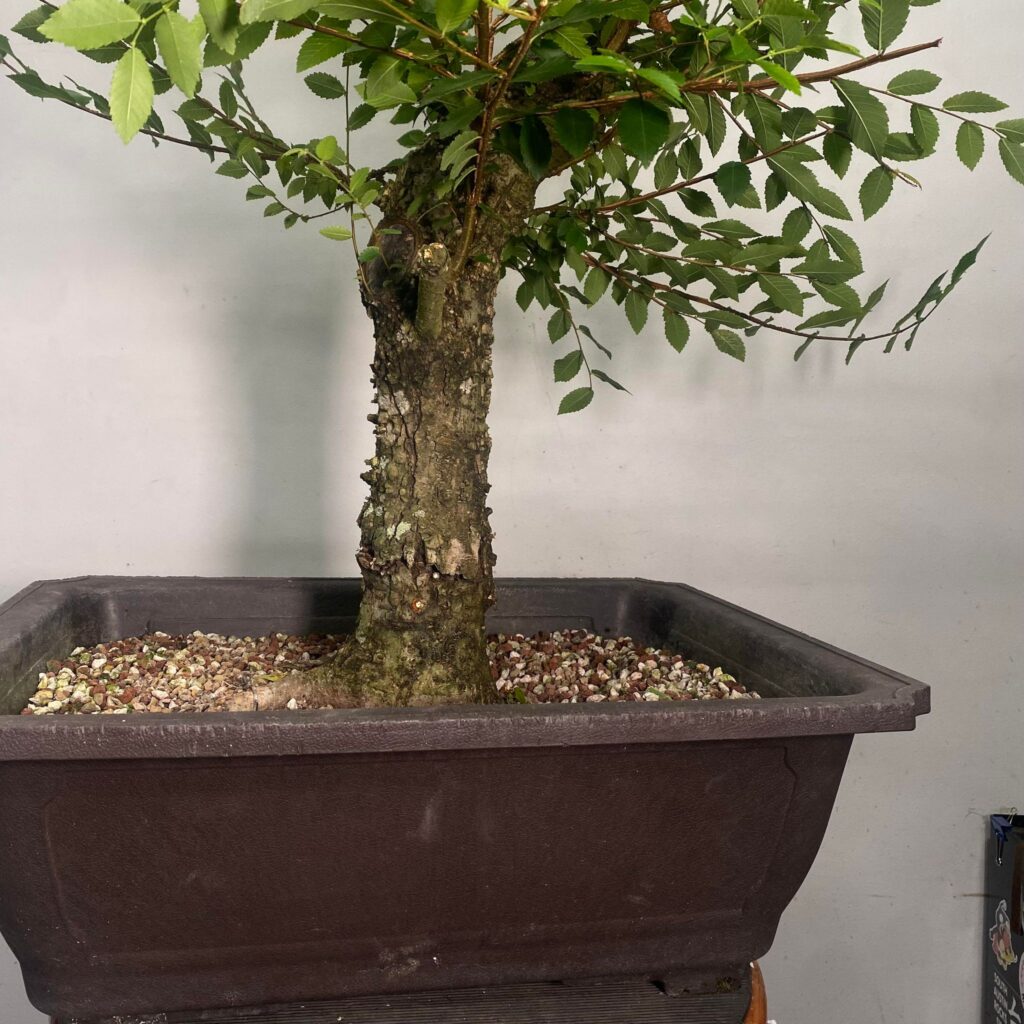
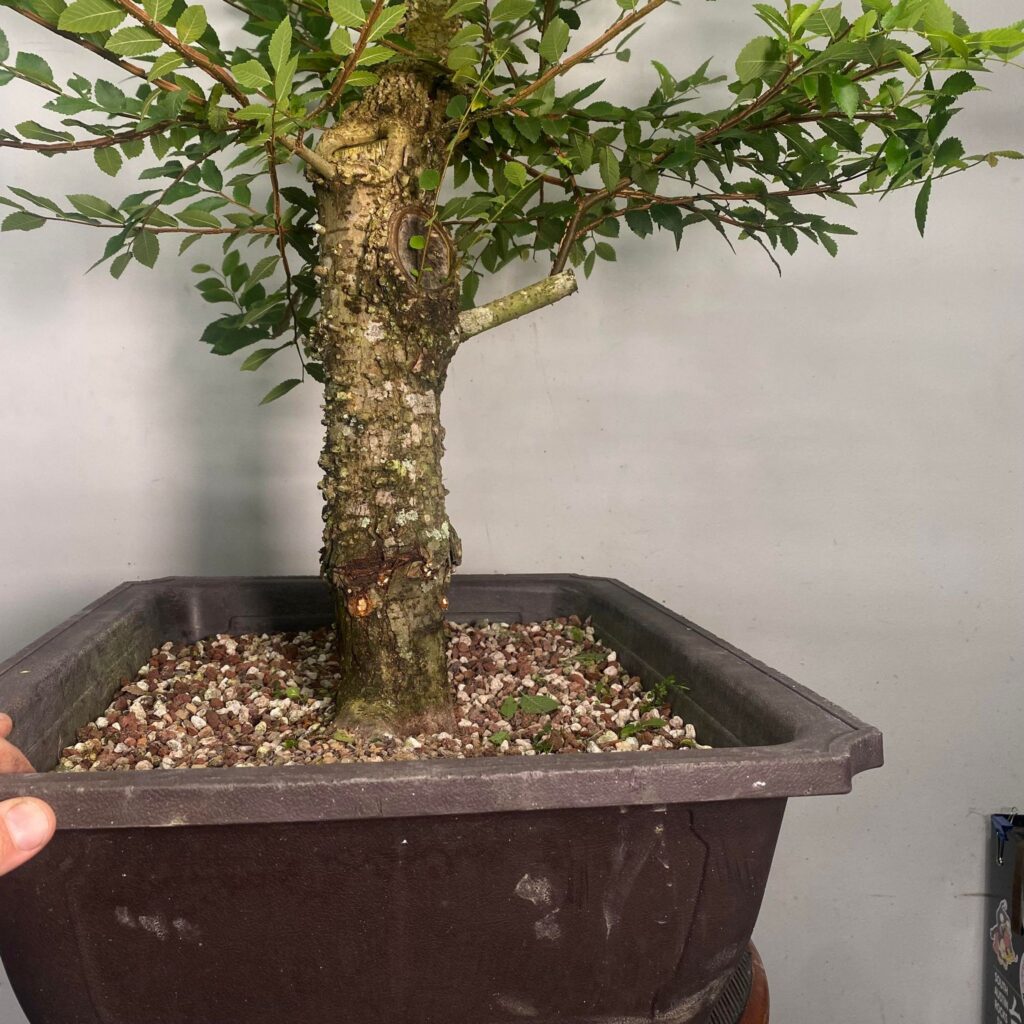
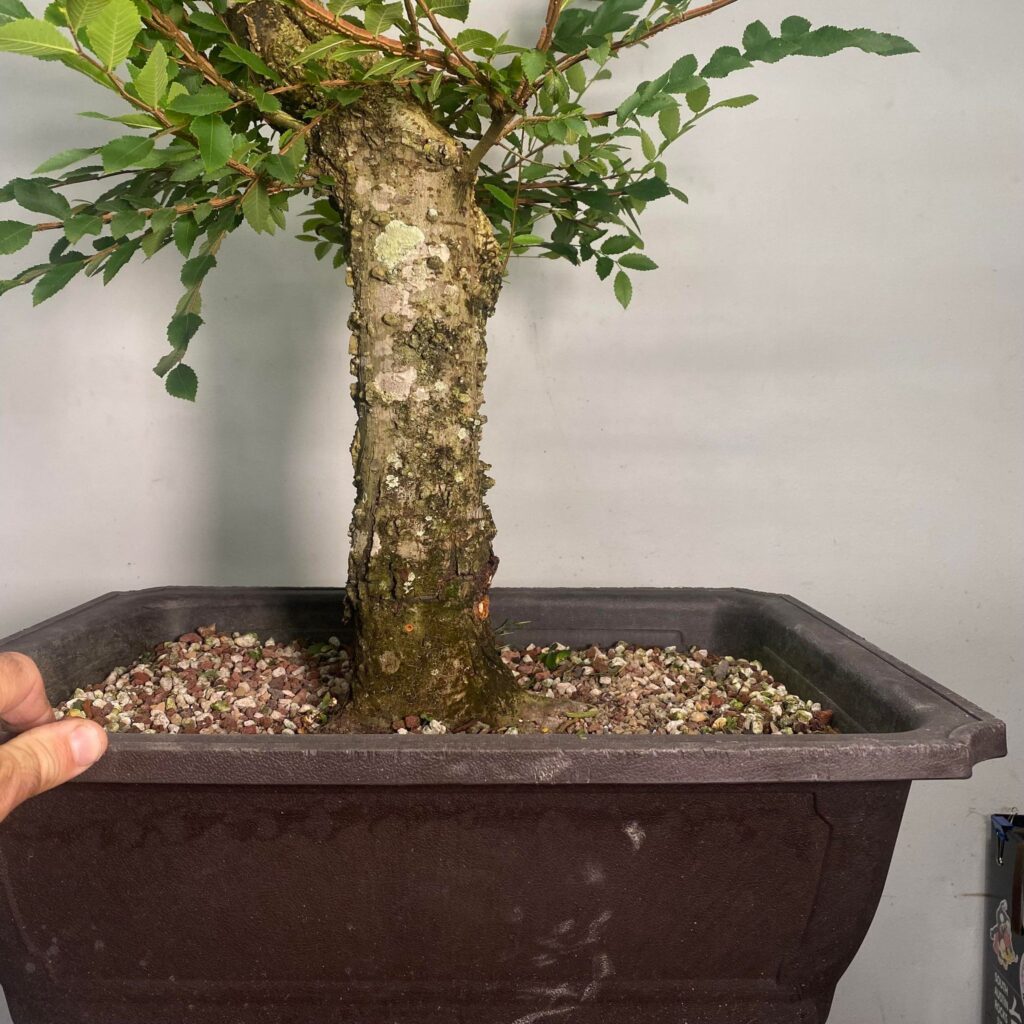
I’m going to be honest, all of these possible “fronts” are not great and don’t excite me a whole lot. So, I’ll have to be a little more creative in deciding on the the best one for our design. One of the ways to make a tree look not so boring and straight is to change the angle ever so slightly. I did this on the one side that didn’t have any inverse taper or an obvious smooth section in the bark patterns. Smooth spots in the bark can help move the eye along the trunk line but smooth flat spots on the lower trunk interrupts the aged look we’re going for.
Inverse taper is a term you will see be using in bonsai a lot. The ideal trunk line of a bonsai should have some kind of gradual tapering to it. This means that the bottom of the trunk should be the biggest and widest section of the tree from the start of the soil line. Then from there, depending on how tall the tree is going to end up being or based off of proportions the bonsai artist has chosen for the design, the trunk’s size should taper down. So a bonsai can start off with a 3 inch wide trunk and then step down to 2 inches to 1 inches to nearly unmeasurable as we travel up the trunk. This should give the bonsai the appearance of disappearing into the sky. Bonsai is an illusion to make the viewer believe the tree is larger then it is in reality. So that means that inverse taper defeats the entire line of the tree by looking like a bulge in the line of the tree.
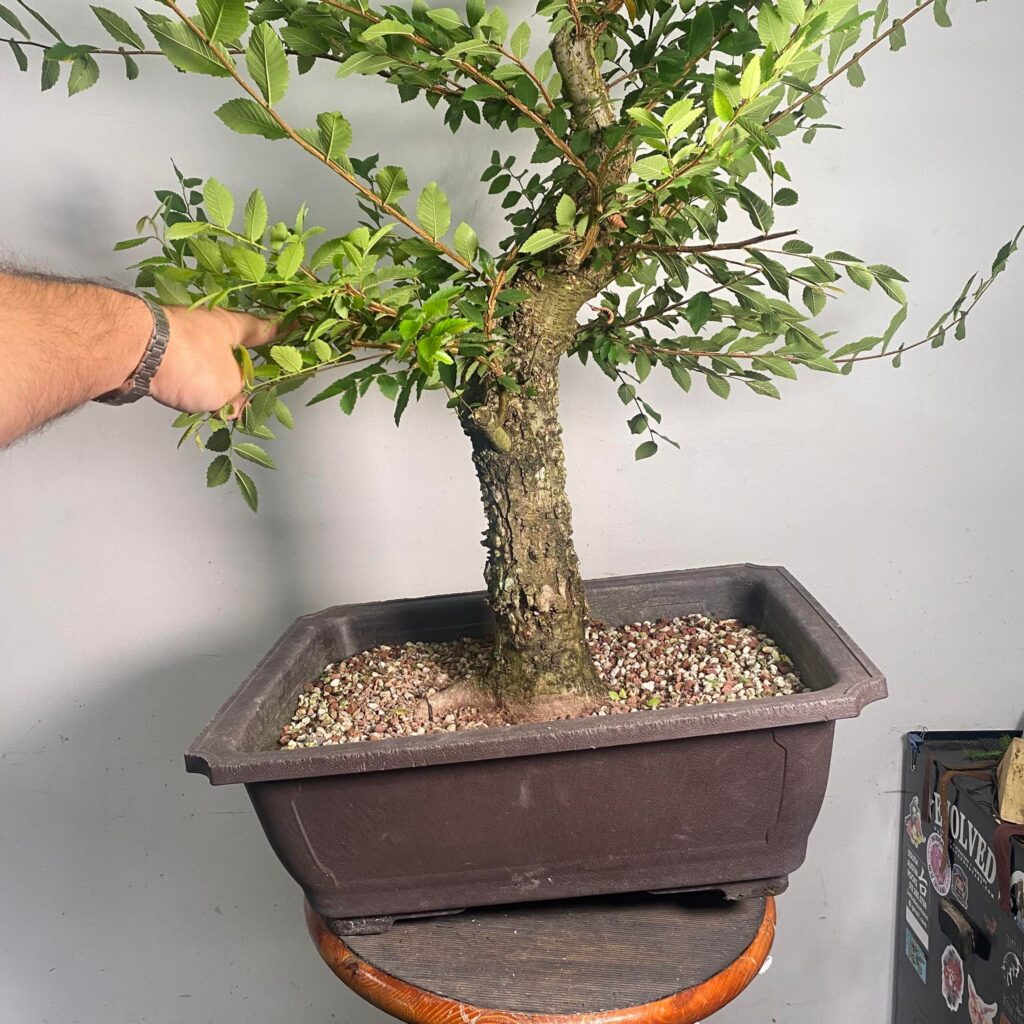
This is still not as good as we could ask for when it comes to taper. The angle change helps but doesn’t completely cover up the fact that there’s a foot long section of the trunk that is straight and not tapered. Branch placement can help take the viewer’s eye away from that section though. So, let’s make some selections.

The very first branch emerging from the trunk was cut back last year in an attempt to get more interesting movement out of it. Things didn’t go quite as planned and the branch now has a really straight section in it before the new stub turns into a shot that has a near 90 degree angle. Leaving this branch on and trying to develop it will cause many more issues in the future so it needs to be removed. The first branch in our design needs to be the more interesting and it also needs to contribute to the overall style of the tree better. It should have a downward angle towards the ground to tell us that it is the oldest branch on the entire tree. There are a few small shots coming off of an older wound that I can wire down for now and grow out into a perfect first branch. I’m willing to take the time to grow this tree right, so we have to restart.
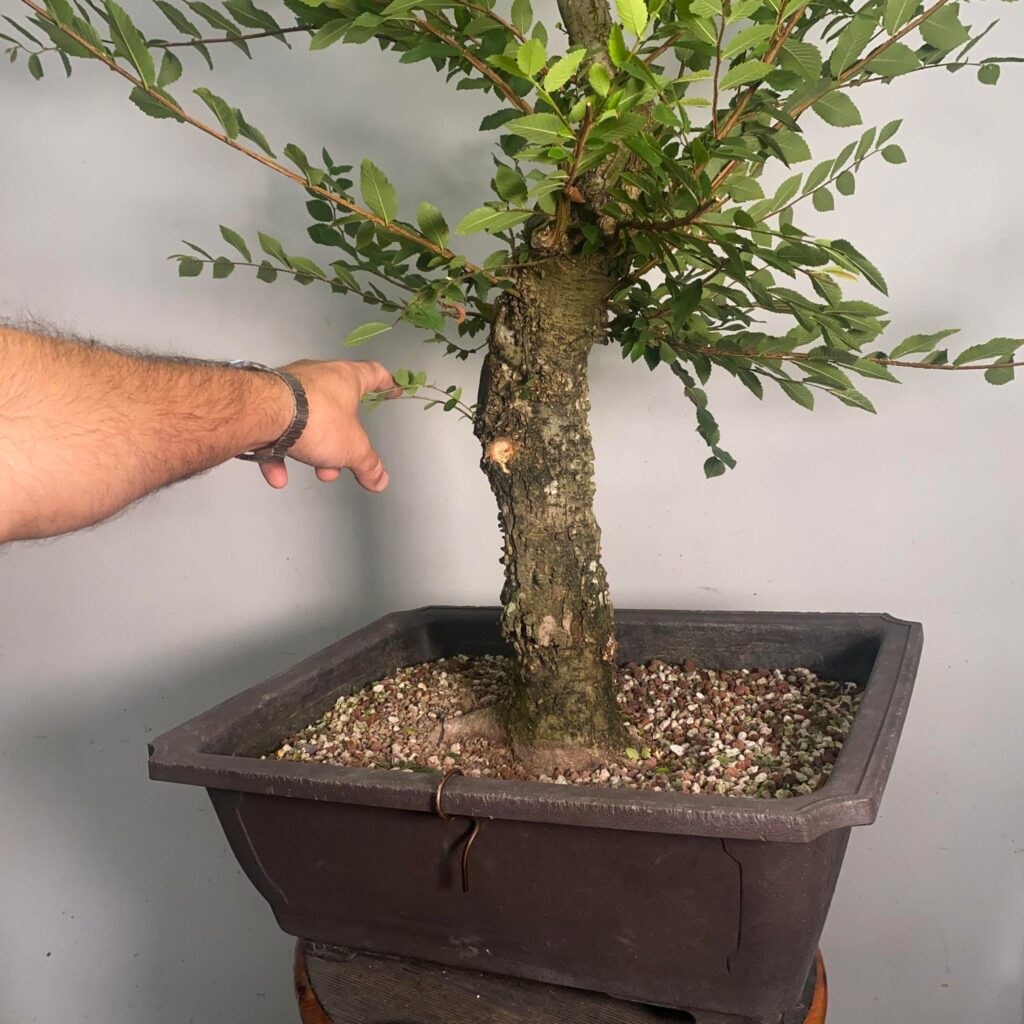
One of these two shots will be my future first branch. I will set a good angle on them now and see which one grows stronger and faster and then remove the other. This of course will take many more years to come before I cut it back again.

Ta da! I wired out little twigs. One day this is going to be the best part of the entire tree. Trust me!
Now it’s time to work my way through the rest of the tree and wire every branch I’m going to keep for the future. Winged elms grow branches in all kinds of odd directions so I will need to go through and sort them out. I did something very similar with the sweetgum in the previous post if you want to refer back to that post as well.
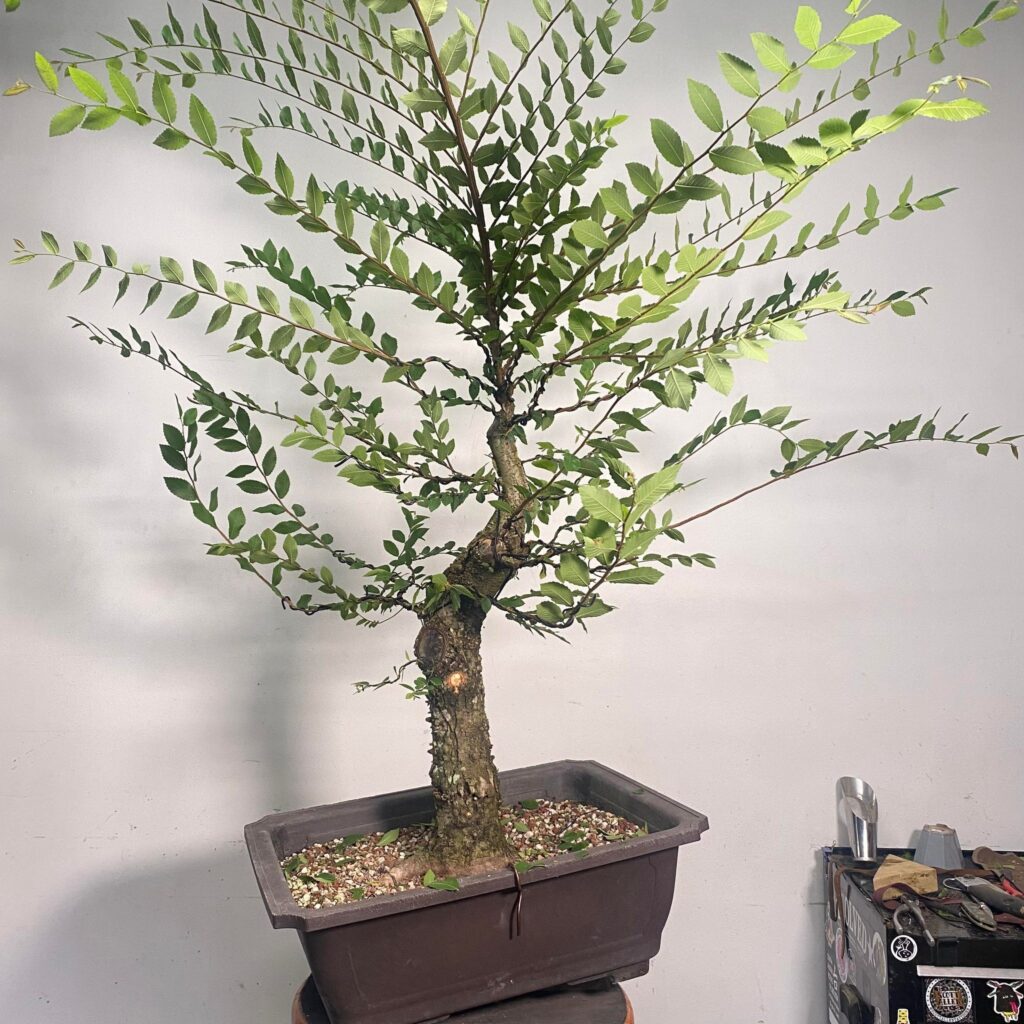
I took my time to lay everything out so that each branch is important. I did not prune anything back that I want to grow out. This tree is still growing new roots to replace the ones that were cut away in order to get it into this container in the first place. Cutting back shots would stop the flow of nutrients from branch tip to root tip. The more the new shots harden off and continue to run, the more the roots will do the same. I usually tell new bonsai practitioners to not cut anything back until the tree has had a full year to recover. I wanted to set up this tree a little earlier with much more gentler work. Plus, my aftercare will be on point as we have all the resources we need at the nursery for this type of work. Observe here that I am not doing anything extreme such as harsh bends, woodcarving, or tight cut backs on shots. The only other thing I will do is remove the branches growing above the potential finished height of this tree. I already know where the trunk line is going to end and I have the taper I’m looking for. All I need is a sap line for the tree to pull over its wounds to form scar tissue. I can do away with some of the things that are blocking sunlight to the parts I need more growth in without worrying about making a too large of an offense to the tree.

It doesn’t look like much now but in about 3-5 years I will have a lot of the branch structure I need to cut back to and start refinement with.
There’s another saying you’ll see a lot in bonsai: this tree will be a 3-5 year project. This is something a lot of bonsai growers will say that have a good amount of time and experience. This saying should be taken with a grain of salt though because this is in reference to very vigorous species, example being this winged elm. In my zone, in my hemisphere of the world, a lot species I like to grow for bonsai are much more aggressive. It is sub-tropical in southeast Louisiana and we get bonus growing seasons most years. With 10-11 months of on-again, off-again growing seasons I can cut down a lot of time. This just means I need to be more diligent in my trimming and wiring.
Growing things so fast here can be a blessing and curse to be honest. If I don’t check on a winged elm every week that I wired out and I come back to that same tree in a few months during growing season, the wire could be severely bitten in. At that point I’ve wasted my time even preforming the work in the first place and it would be best to cut the branch off and start a new. To be transparent with the readers, I have done this many times over and have learned hard lessons in growth management. One mistake can set me back many years with a project that could easily been accomplished in the 3-5 year time span.
In other zones, in other parts of the world things grow at various rates. There is such a thing as “zone envy” as well. As hot as it is here I wish I could grow larch or crab apples like they can in cooler climates. Hell, I wish mountain hemlocks would grow here, too. Being in such a warm region has its set backs, trust me.

Here’s another doodle. I drew the trunk a little thicker then reality but this isn’t unobtainable with this tree with many years of training. the tree’s roots will grow and help flare out the lower section of the trunk in the distant future. The growing and development of the first branch will also help thicken the left side of the trunk as well. Hopefully it will have the gradual taper in the trunk line at the 5 year mark I’m looking for. Or it could look completely different from what I’m imaging. That’s the fun of growing trees for bonsai, sometimes you’ll be surprised!
-Evan