
Here’s another update on a sweetgum, Liquidambar styraciflua, that I have been developing for about 3 years now. I made a post about his tree in 2022 and you can click here to see how far we have come since then.
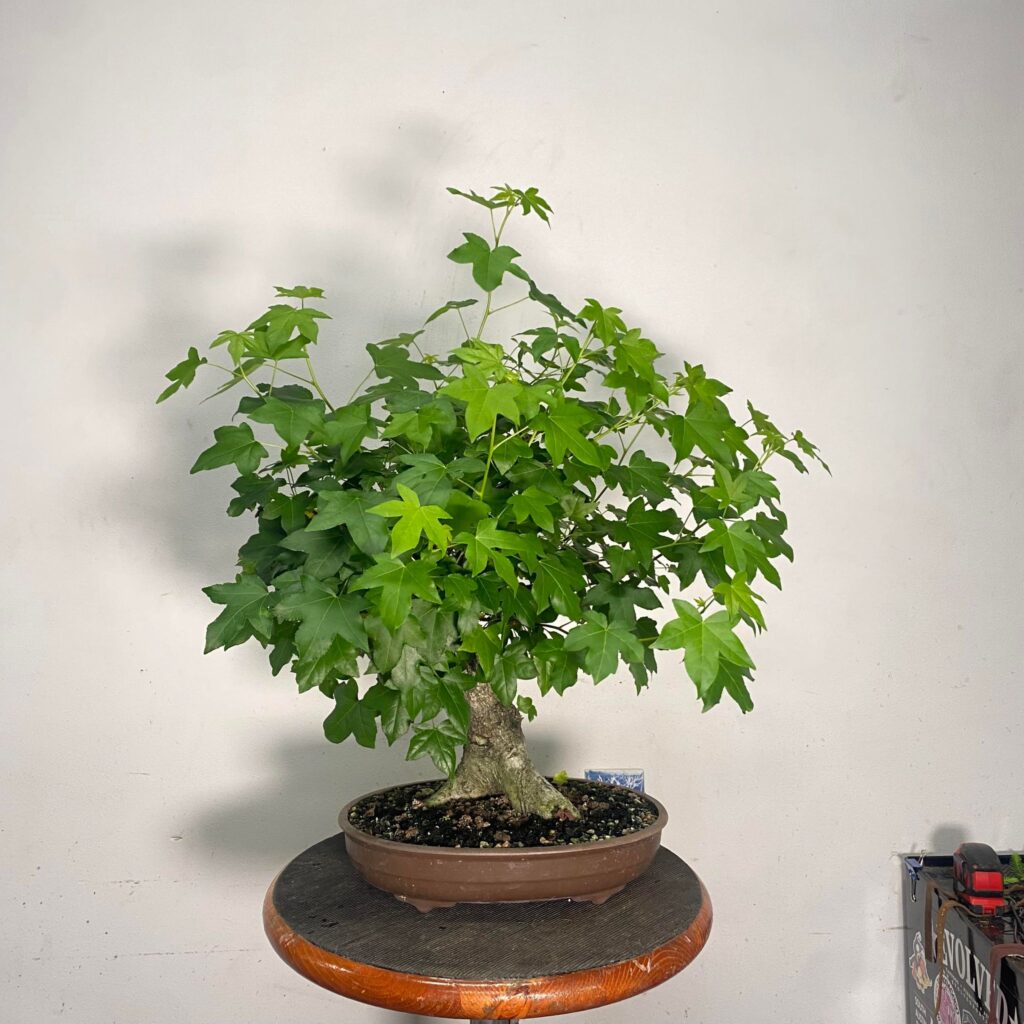
I didn’t do a post on when I repotted this tree into the plastic oval it is in now but here it is. The roots are actually a lot wider then I predicted and I had to actually make a sizable chop to an overly long root on the right-side. The root was thick and ran much to far to ever develop into a convincing surface root to fit the scale of the tree. Plus, I wouldn’t have been able to ever get this tree into the bonsai container I’m imagining for it with a root that size. So, I crossed my fingers and hoped the tree wouldn’t die!
It did recover well from the chop as you can see, otherwise a large section of the tree would have died. The chopped root has tons of fibrous roots poking out of it in all directions. Once I do the next repot to transfer this tree into it’s show worthy container in the future I will have to remember to do a detailed post on how the roots are doing and how to sort them out.
Since the last post, this sweetgum has been allowed to blow out (grow freely to thicken branches) and I cut back to shorten the internodes several times. Several times would be some where in the ball park of 8-10 times over the coarse of 2 years thus far. Our growing seasons are quite long here in southeast Louisiana and that’s also considering that I only organically feed this tree that it still grows like a weed!
I know I talked about leaf reduction a good bit in the last post as well and this tree isn’t really showing too much reduction, yet. That’s because leaf reduction hasn’t been the goal so far with the development of this tree. I’ve been directionally pruning and wiring out a few branches to create more and more interest as time goes on. Sweetgums have notoriously long internodes and one way to fix this is to prune back to nodes that are closer together, and also closer to the trunk, and then pinch the tips of the new growth proceeding it. Then, let the new bud extensions blow out again. Rinse and repeat that process.
Internode: This is the spacing between buds on a branch of a tree or shrub. A lot of other plants such as grasses also have internodes. Internodes on plants greatly vary in distance from plant to plant. For instance, a bald cypress can have internode spacing as small as a few centimeters while a winged elm typically has internode spacing around an inch. Internode spacing can be reduced just like the leaf size of trees can be reduced as well. Smaller internodes gives us a better opportunity to create tighter branch structures which is highly desirable in bonsai.

I did a particle defoliation on the sweetgum so I can see the structure easier and also to see which branches need more time to thicken. This defoliation will also help control energy in the tree as well. Before I preformed this work, this tree was going into a slight summer dormancy and dropping interior leaves. I don’t want this to happen as this will also lower my chances of maintaining the internode spacing I’ve been working on building out. I will also be wiring this tree again to add even more movement to the branches. Little intricate movements in branches is the best way to create mature looking bonsai!
I stress on the particle defoliation practices here because I believe in keeping trees in heavy development mode in tip top shape. We do a lot of offense things to trees while we are working on them such as chopping, constant pruning, root work, and wood carving. In order for the trees we practice these techniques on to survive, they need plenty of foliage during their growing season to continue to move resources and recover. A full defoliation, just so our job to apply wire is little bit easier, is a much bigger offense to the tree. Full defoliations trigger a panic mode in the plant especially if it is at the peak of a growing season. If preformed on the wrong tree at the wrong time, the results can be quite the reverse of what was intended. Full defoliation techniques should be reserved for bonsai that are in full refinement mode and only to help reduce leaf size for an upcoming exhibition in most cases.

The tree after applying wire and making some bends to line up foliage pads and zones in its structure. This tree isn’t following the Japanese model for a slanting style completely but I am still using a lot the ground work for the design. I have a strong indication of trunk line and the movement of the tree going from left to right. The flow of the branches helps the tree feel balanced as it leans back but then throws its branches back at the viewer. This suggests that the tree is in a coastal area, aka a Louisiana feeling coastal zone.
The reason why I bring up that this tree isn’t completely following the Japanese bonsai model is because it will not have a true first branch in its design. Instead, I will be building the first pad of foliage on the right side of the tree with multiple branches, some thick and some finer. The reason being is that I want to build a somewhere naturistic design and also honor the sweetgum’s growth habit. Older sweetgum trees in Louisiana are very tall and slender and their lower branches tend to be dainty and dangly looking. The weight of the leaves and the tree’s fruits weight down the branches at the ends. What is even more interesting is that in the fall when they are leafless and when the weight is off of the branches, they will ascend a good ways back up. Sometimes they will lift almost completely vertical.
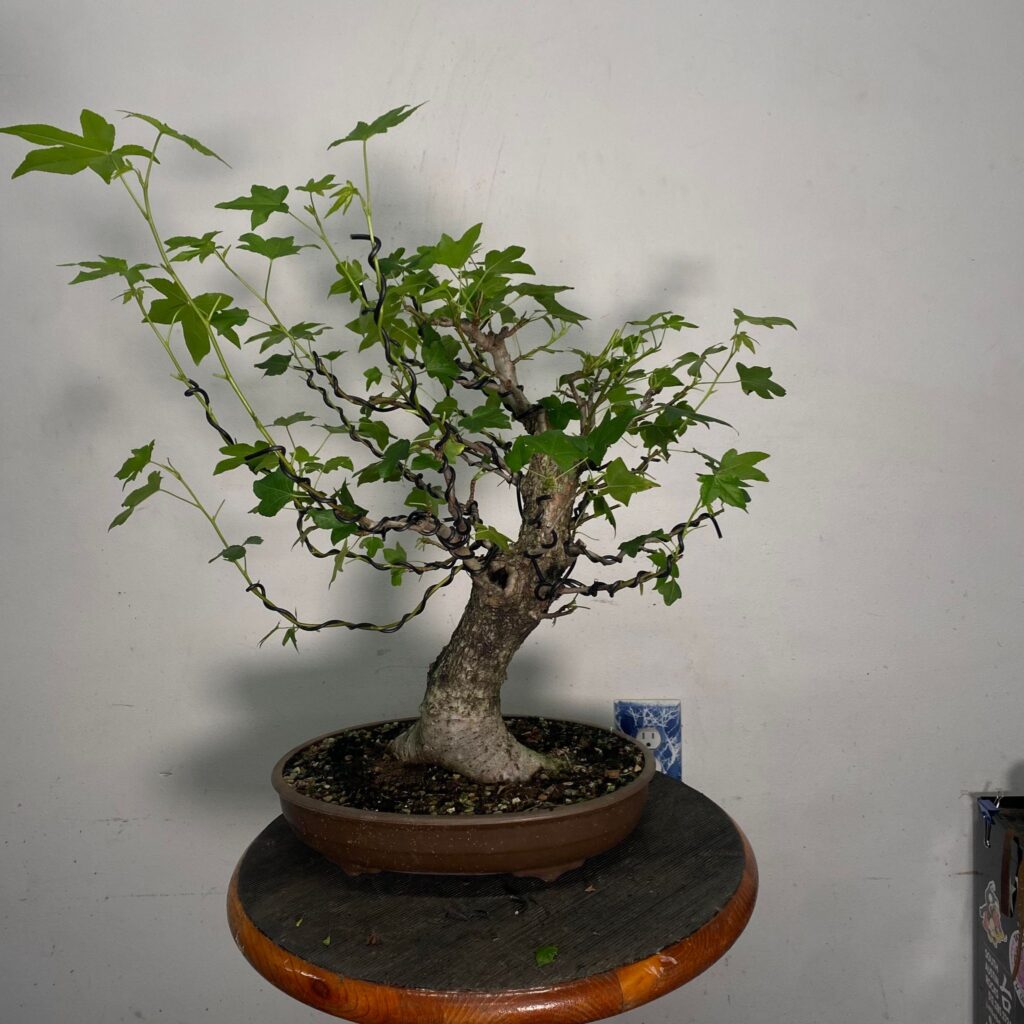
I’m showing the back of the tree here as well so that you can see how the branches are laid out. Every branch has its place in the design. There should not be any crossing branches or branches that will eventually shade out the one below it. Each branch is laid out systemically in a way to make sure sunlight is hitting everything but also keeping a natural feel to how they move into those spaces.
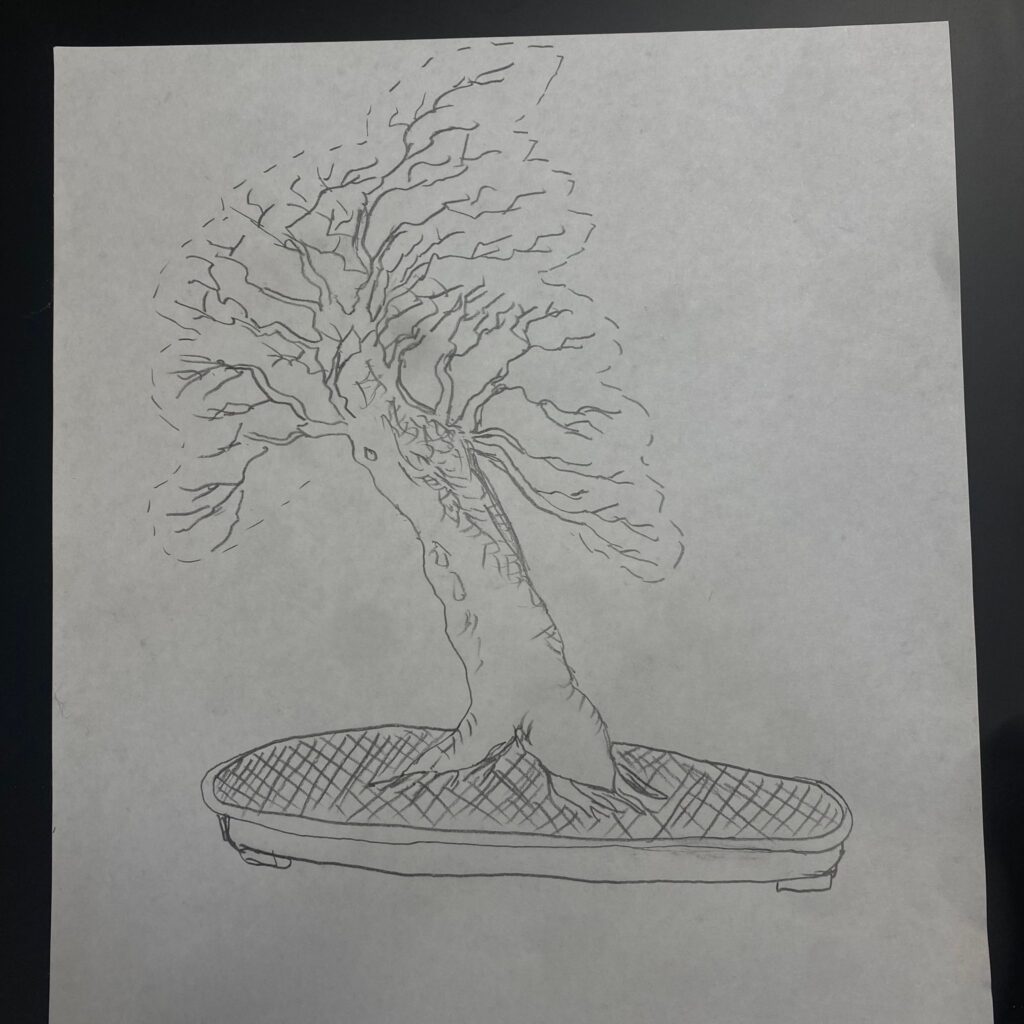
I did a doodle of the sweetgum. This is what I hope to have the tree developed into within the next 2-3 years depending on how things go. Some years are easier on trees then other depending on the amount of water and blazing hot days in the summer. This summer is looking to be slightly more mellow then last year’s near desert bowl feel. A short winter can also set a tree’s development back as well. We need a full 30-40 days of dormancy so that our deciduous tree can recharge and move the nutrients they need around in time for Spring. Sometimes in southeast Louisiana that dormancy period is too short lasting only 20 or less days. Here’s to a mild summer and a freezing winter for our bonsai!
-Evan